
From the Library: covers, censuses, and editions, documented. Browse the Library →
SOJ Street Fighter II · Vintage Fighting Games
← Back to the Fighting Games Gallery

The History of Street Fighter II on Home Consoles

The arcade came home, and home was never just a copy.

In March 1991 Street Fighter II remade the arcade. Fifteen months later Capcom had to fit that arcade onto a home cartridge, and the result was not a souvenir. The Super NES port of 1992 sold the console it ran on, topped charts on three continents, and started a home release cadence, Champion Edition and Turbo on both 16 bit machines, that taught the industry how long one game could live.

This page is the history of the ports: how the conversion was made, how each version landed, and how the era received them. The separate question of why the arcade game itself kept spawning versions is answered elsewhere in this Library, on the versions page.

THE COVERS

The World Warrior at home
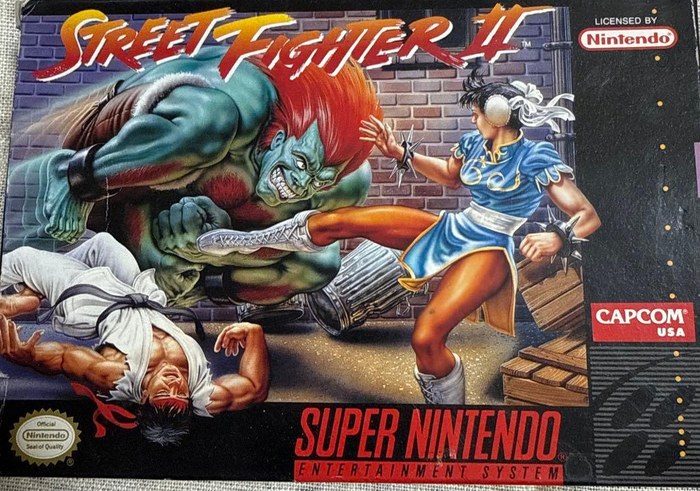
Street Fighter II American Super NES box art, Blanka and Chun-Li
America · Super NES · 1992
Blanka rears over a floored Ryu while Chun-Li strikes: the American box for the first home version, the one that had to stand in for the arcade.
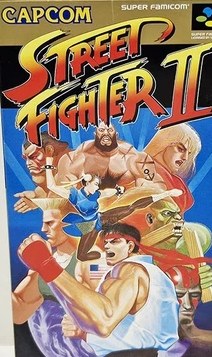
Street Fighter II Japanese Super Famicom box art, the full cast
Japan · Super Famicom · 1992
The Japanese box gathers the whole cast around Ryu. Same painting family, different promise: in Japan the arcade was already a national habit.

HOW IT WAS MADE

An arcade board in a 16 megabit cartridge
The first 16 megabit SNES cartridge
The Super Famicom version arrived on June 10, 1992, the first game released on a 16 megabit Super NES cartridge. The arcade original lived on Capcom's CP System board, and many aspects of it were altered or simplified to fit the smaller memory.
What the squeeze kept
All eight fighters, their stages and their moves made the trip, arranged by a soundtrack team led by Tatsuya Nishimura, newly arrived at Capcom from Tose, with help from Yoko Shimomura and Isao Abe. What it felt like mattered more than what it measured.
A code from the future
The port hid one trick the arcade original did not have: a secret code letting both players control the same character, in the alternate palette introduced by Champion Edition. The bosses stayed unplayable, but the mirror match, the sequel's headline, was already in the box.

THE RELEASE

June in Japan, then the storm
One million in two weeks
In Japan, one million copies of the Super Famicom version sold in June 1992 within the first two weeks, at a retail price of 10,780 yen. It topped the Famitsu sales charts from June through August.
The American summer
The North American version followed on July 15, 1992, and sold 750,000 units by September 30 at 74.99 dollars. Electronic Gaming Monthly wrote: "Never has a game taken the country by storm as this one has." Four million cartridges had sold worldwide by September, five million by the end of the year.
The bundle
In the United Kingdom the game replaced Super Mario World as the bundled game for the Super NES, a changing of the guard in a single box: the pack in was no longer a platform game, it was an arcade port.

HOW IT WAS RECEIVED

Faithful was the word
Nintendo Power · 16.2 of 20
"The hottest arcade game around has been faithfully reproduced for this Super NES conversion," Nintendo Power wrote, calling it "just like having the arcade game at home." The magazine ranked it the best Super NES game of 1992, ahead of A Link to the Past.
The long seller
The Super NES version passed 6.3 million copies and became Capcom's best selling single game, a title it held for the next 20 years, until Resident Evil 5 passed it in 2013. It remains Capcom's best selling game on a single platform.
The system seller verdict
Electronic Gaming Monthly, ranking it the ninth most important game since the magazine began in 1989, called it the first killer app for the Super NES and said no game did more to prop up arcades in the 1990s.

WHAT IT LEFT BEHIND

The home cadence

The port set the rhythm the rest of the decade followed. A year later the Super NES received Street Fighter II Turbo (Japan July 11, 1993; North America August 1993), a 20 megabit cartridge that carried Champion Edition rules as its Normal mode and Hyper Fighting speed as Turbo, and it sold 4.1 million copies. The Genesis answered that September with Special Champion Edition, delayed so Capcom could fold the same Turbo content in, on a 24 megabit cartridge; it sold 1.65 million. Super Street Fighter II followed on Super NES in 1994 with four new fighters and two million more sales. Across the two 16 bit consoles, the versions of this one game sold more than 14 million copies.

That is the home port phenomenon in one shelf: the arcade stopped being a place you visited and became a cartridge you owned, then a cartridge you owned three times. Why the first of those cartridges mattered so much, and what the Genesis version had to engineer around, are the two questions this shelf keeps.

Why did the SNES port matter so much?The three button problem
MORE FROM THE FIGHTING GAMES ARCHIVE →
One shelf of eighty-two in the Library. Browse them all →

THE FIRST WORD

New pages and new pieces, first.