
From the Library: covers, censuses, and editions, documented. Browse the Library →
SOJ Street Fighter II · Vintage Fighting Games
← Back to the Fighting Games Gallery

Why Did the SNES Street Fighter II Matter So Much in 1992?

Because for a year, the biggest game on Earth had exactly one home address.

Plenty of arcade hits were ported home in the 16 bit era. Only one of them is routinely described, in the same breath, as the game that propped up the arcades and the first killer app for a console. The Super NES Street Fighter II of 1992 was both, and the reasons are concrete: exclusivity, fidelity, and timing.

THE EXCLUSIVE WINDOW

A year with one address
The arcade at its peak
The arcade game topped the RePlay arcade charts in the United States from May 1991 through August 1992, sixteen months at number one. For most of that run, the only way to play it was to leave the house and feed a cabinet.
One console had it
The Super NES version was, for over a year, the only 16 bit home version. Nintendo World Report's retrospective puts the cost to the rival plainly: without a version of Street Fighter II, the Genesis began to lose steam in the 16 bit war.
A gift, in their words
The same retrospective calls the July 1992 port "a gift from Capcom" to the Super NES: an exclusive port of the arcade game that had recently been eating quarters like none in recent memory.

THE PROOF

Sales, bundles, and a 20 year record
6.3 million cartridges
The Super NES version sold more than 6.3 million copies. It was Capcom's best selling single game for the next 20 years and remains its best selling game on one platform.
The pack in changed
In the United Kingdom, Street Fighter II replaced Super Mario World as the game bundled with the Super NES. Nintendo chose an arcade port to introduce its own machine.
Best game of 1992
Nintendo Power ranked it the best Super NES game of 1992, above The Legend of Zelda: A Link to the Past, and scored the conversion 16.2 of 20 for how faithfully it reproduced the arcade.

WHY IT LANDED

Timing is the whole answer

Put the three facts in order and the importance explains itself. The biggest arcade game since the golden age arrived home first on one console, close enough to the cabinet that Nintendo Power could call it "just like having the arcade game at home," at the exact moment the 16 bit console war was being decided in living rooms. Every month of exclusivity converted arcade loyalty into hardware sales, which is what a system seller is.

The port also changed what a home version was expected to be. Before it, arcade conversions were understood to be approximations. After it, and after its Turbo and Super successors sold millions more on the same machines, the home port was the main event and the arcade was the preview. The full release by release story is told on this shelf's history page.

THE GAME ON THE SHELF

Street Fighter II, at home in 1992
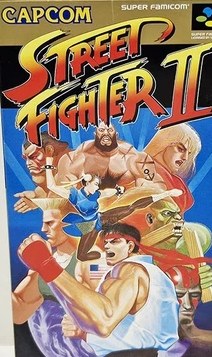
Street Fighter II Japanese Super Famicom box art, the full cast
Street Fighter II · Japan · Super Famicom
The full cast on the Japanese Super Famicom box, the 1992 home release that carried the arcade game into households.
The History of Street Fighter II on Home Consoles
MORE FROM THE FIGHTING GAMES ARCHIVE →
One shelf of eighty-two in the Library. Browse them all →

THE FIRST WORD

New pages and new pieces, first.