
From the Library: covers, censuses, and editions, documented. Browse the Library →
SOJ Metal Gear · What Inspired It
← Back to the Library

What inspired Metal Gear?

A prison break film first, then a shelf of films Kojima named himself.

This page follows the Library's inspiration rule strictly: a film belongs here only if Hideo Kojima named it himself, in an interview or in his own essays. The two Tier 1 sources are his 1999 interview with Nice Games, translated by Shmuplations, and the essays he wrote in 2004 for METAL GEAR SOLID naked, where he worked through his cinematic sources one by one. Resemblances other writers have spotted are not printed here as inspirations.

The founding one is a prison break. Asked how the war game that became Metal Gear came to him, Kojima answered: "What I was fixated on making, in the scope of a 'war' game, was an escape game. You know that old movie, The Great Escape? I thought it would be awesome to make a game built around a concept like that, of trying to escape from somewhere." His senior developers dismissed it, in his telling, with "there's no games like that," and the concept only moved when a working build showed the team the exclamation mark popping over a surprised guard's head. The Great Escape (1963) is not a flavor note on Metal Gear. It is the shape of the game: one man, a fortified place, and getting through it unseen.

He returned to the escape theme by name in his essays: of Papillon (1973) he wrote, "It had an influence on MGS, along with The Great Escape, because of the concept of 'escape.'" Two Steve McQueen prison films, cited for the same single idea, twenty years of games downstream of it.

THE FILMS, IN HIS OWN WORDS

Tier one: he named them
Kanal · 1957
"Most people would probably pick Ashes and Diamonds as their favorite of Wajda's films, but I like this one the best. It had a big influence on MGS, too." Andrzej Wajda's Warsaw Uprising film, resistance fighters moving through the sewers of an occupied city.
Django · 1966
"I also love Spaghetti Westerns. This is what led to Ocelot, among other things, and this film is my favorite out of all of them." Sergio Corbucci's gunslinger, the direct ancestor Kojima named for Revolver Ocelot.
El Topo · 1970
"The way the boss characters appear one-by-one and reveal their beliefs had quite an influence on MGS." Alejandro Jodorowsky's duels against a sequence of masters stand behind the series' procession of bosses who explain themselves before they fight.
The Towering Inferno · 1974
"Just like Dawn of the Dead, its closed environments influenced MGS, particularly the use of elevators, shafts, ducts and stairs." The disaster film's trapped building is a level design document: vertical, sealed, and climbed.
The Pink Panther · The Humor
"My favorite comedic actor is the late Peter Sellers. This is where MGS gets its sense of humor." The jokes that dissolve tension in the middle of an espionage thriller have a named source, and it is Inspector Clouseau's creator.
The Great Escape · 1963
The origin, again, because everything else hangs off it: an escape game, proposed by a new planner, dismissed by his seniors, and saved by a punctuation mark over a guard's head.

TWO BOXES, TWO ERAS OF INFLUENCE

Read the covers carefully
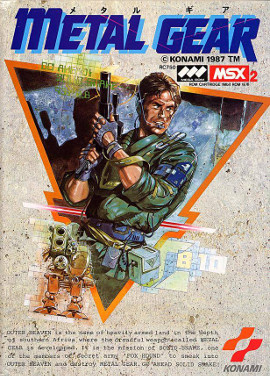
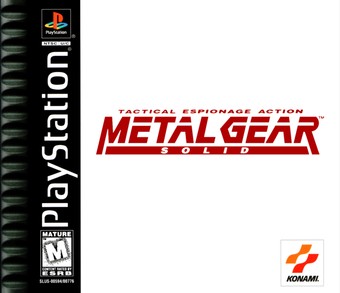
Metal Gear Japanese MSX2 box art, 1987
Japan · MSX2 · 1987
The first game's Japanese box. Snake's pose on it has its own documented story, told in the footnote below, and it is not a Kojima statement, so this Library files it separately.
Metal Gear Solid American PlayStation cover, 1998
America · PlayStation · 1998
By Metal Gear Solid, the influences Kojima listed in his essays, sewers, ducts, one by one bosses, jokes under pressure, had become the game's visible architecture.

ONE HONEST FOOTNOTE

Labeled, not hidden

The pose on the original Metal Gear packaging was traced from a publicity still of Michael Biehn as Kyle Reese in The Terminator (1984). That is documented, but it is not an inspiration Kojima claimed: the illustration was drawn by freelance artist Akira Nishimura, who produced key art for several Konami titles of the period, and Kojima, then newly employed, has said he had no involvement in the illustration. A borrowed box pose by the art department and a director's stated film influences are different kinds of evidence. This page keeps them in different boxes, which is the whole point of the gate.

Why is the original a stealth game?Why did MGS2 replace Snake with Raiden?What happened after Kojima left?
MORE FROM THE METAL GEAR ARCHIVE →
One shelf of eighty-two in the Library. Browse them all →

THE FIRST WORD

New pages and new pieces, first.