
From the Library: covers, censuses, and editions, documented. Browse the Library →
SOJ Mortal Kombat II · Vintage Fighting Games
← Back to the Fighting Games Gallery

What Were Friendships and Babalities For?

They were the rebuttal: the bloodiest game in the arcade answering its critics with a gift and a baby bottle.

Next to two Fatalities per fighter, Mortal Kombat II introduced two finishers that kill no one. A Friendship ends the match with a kindness. A Babality ends it with the loser bawling in a nappy. Both were deliberate, both were explained on record by the people who made them, and neither had anything to do with censorship. They shipped in the arcade version itself.

THE JOKE

Friendships, in the creator's words
A showcase feature
Ed Boon, in the History of Fatalities documentary: "With Mortal Kombat 1, it was something that we threw in there and said, okay, maybe people are going to like it. With Mortal Kombat 2, we knew that was a showcase feature for these games." Fatalities doubled, two per fighter, and the team looked for somewhere else to go.
Making fun of the attention
Friendships, the finishers where the winner dances, gives a gift, or signs an autograph instead of killing, came from the outcry itself. Boon: "It was kind of like our way of making fun of all of that attention that game got because of the Fatalities." IGN's summary of the era agrees: the game "even parodying it in game" wore its notoriety as a badge of honour.
What a Friendship is
A Friendship is a non malicious interaction performed on a beaten opponent at the Finish Him moment: a present offered, a dance, a small kindness, scored exactly like a Fatality and just as hard to perform. The humiliation is the point. Losing is bad; losing to a gift is worse.

THE BABY

Babalities and a sound effect
Turned into an infant
A Babality turns the defeated fighter into a crying baby version of themselves, costume and all. It is the Fatality's grammar, a secret input at the victory moment, spent on the least violent outcome imaginable.
Dan Forden's sound library
According to Boon in the same documentary, Babalities were thought up by the series' sound designer, Dan Forden, who came across a track of babies crying while searching through sound effects CDs for material to work with. The finisher exists because the sound existed.
Designed less serious
The development record notes the game was made to be less serious with the addition of humorous alternative finishing moves, alongside a more vibrant colour palette. Friendships and Babalities were not accidents or censorship. They shipped in the arcade, uncensored everywhere, as part of the design.

WHAT THEY WERE FOR

Three jobs at once

Taken together, the two finishers did three jobs. They answered the critics in the critics' own terms, proving the team could hear the violence debate and laugh in the middle of it. They extended the game's best feature, the finishing moment, into comedy, giving tournament players a richer way to rub a win in. And they kept the series human: a game that can turn its loser into a baby is a game that knows exactly how absurd its own gore is.

The joke outlasted the panic. GamesRadar later counted Friendship and Babality among the ten greatest things about Mortal Kombat, and when the finishers finally returned to the series decades later, they returned as fan service. The parody had become part of the canon it was mocking.

THE GAME ON THE SHELF

Mortal Kombat II
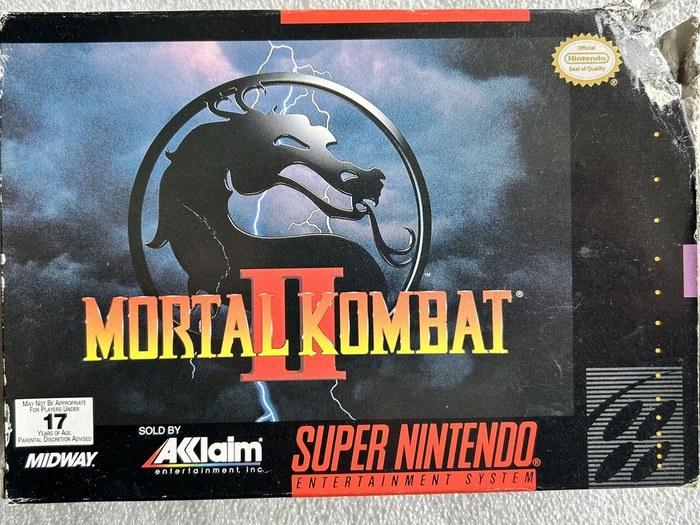
Mortal Kombat II American Super NES box art with under 17 warning label
Mortal Kombat II · America · Super NES
The American Super NES box, complete with its under 17 warning label, for the game that traded Fatalities for Friendships.
The History of Mortal Kombat II on Home Consoles
MORE FROM THE FIGHTING GAMES ARCHIVE →
One shelf of eighty-two in the Library. Browse them all →

THE FIRST WORD

New pages and new pieces, first.