Why Are the Three Tournament Fighters Versions Different Games?
A port moves a game from one machine to another and changes what the hardware forces it to change. Tournament Fighters did something else. The Super NES, Genesis and NES releases share a title, a licence and four playable turtles, and almost nothing else: not their rosters, not their stories, not their bosses, not their fighting systems.
THE EVIDENCE
Compare any two boxes' contentsWHY IT HAPPENED
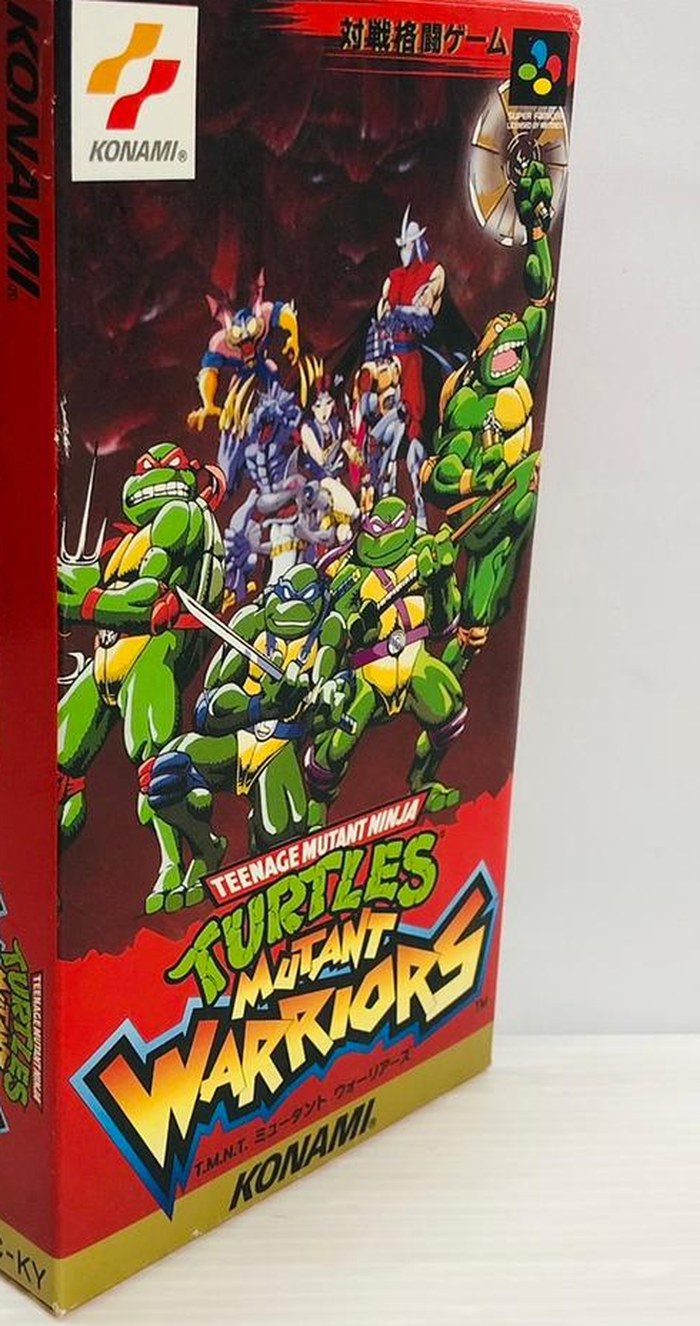
The era, and the machinesStart with what the record shows, because the record is the unusual part: Konami's own release history lists three games, produced in parallel for three platforms, "each featuring a differing cast of characters." Tournament Fighters was marketed in the west as versions of one game; the Japanese Super NES release was not even given the same title, shipping as Mutant Warriors. In substance it was a series wearing one name.
Two forces made that the rational choice in 1993, and both are documented in the games themselves. The first is hardware distance: the NES could not have hosted the Super NES game in any recognisable form, so its version was designed for the machine, smaller roster, simpler stages, a power up system suited to two buttons. The second is the licence logic of the moment: the Turtles sold on every platform at once, the fighting game boom that Street Fighter II started was at full height, and a bespoke game per machine let each version be reviewed, and bought, on its own terms. The Genesis game's darker tone and Dimension X plot are not a port's compromises; they are a different team brief executed in full.
The clearest proof is what happened when the three were finally shelved together. The Cowabunga Collection of 2022 does not contain one game with options. It contains three games, each with its own enhancements, because there was never one game to restore.
ONE OF THE THREE
Tournament Fighters, in Japan