
From the Library: covers, censuses, and editions, documented. Browse the Library →
SOJ X-Men vs. Street Fighter · Vintage Fighting Games
← Back to the Fighting Games Gallery

Why Couldn't the PlayStation X-Men vs. Street Fighter Do Real Tag Teams?

It could not hold four fighters at once. That is the whole answer.

Capcom had publicly promised that the PlayStation and Saturn versions of X-Men vs. Street Fighter would both be arcade perfect. The PlayStation version, released in Japan on February 26, 1998 as the EX Edition and in North America that June, was not, and the reason given at the time and repeated in the record since is plain: the memory limitations of the PlayStation. A tag team game needs both partners, fully animated, resident in memory at all times. The PlayStation build could not carry them.

So Capcom cut in stages. This page lists what went, in the order the record supports, and what PlayStation owners received in exchange.

THE TWO COVERS

Same painting, two very different games
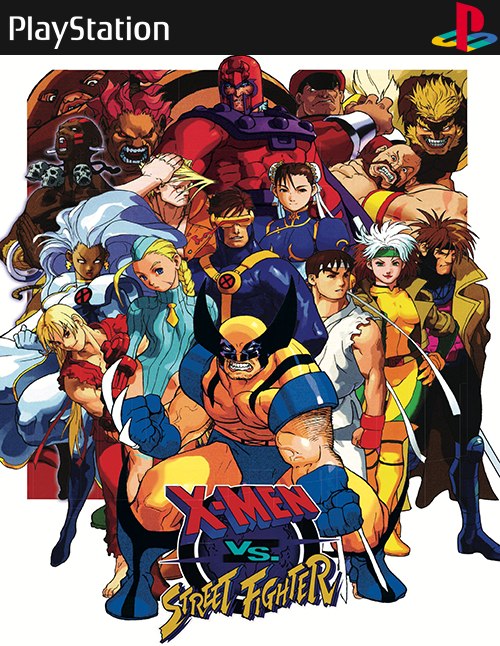
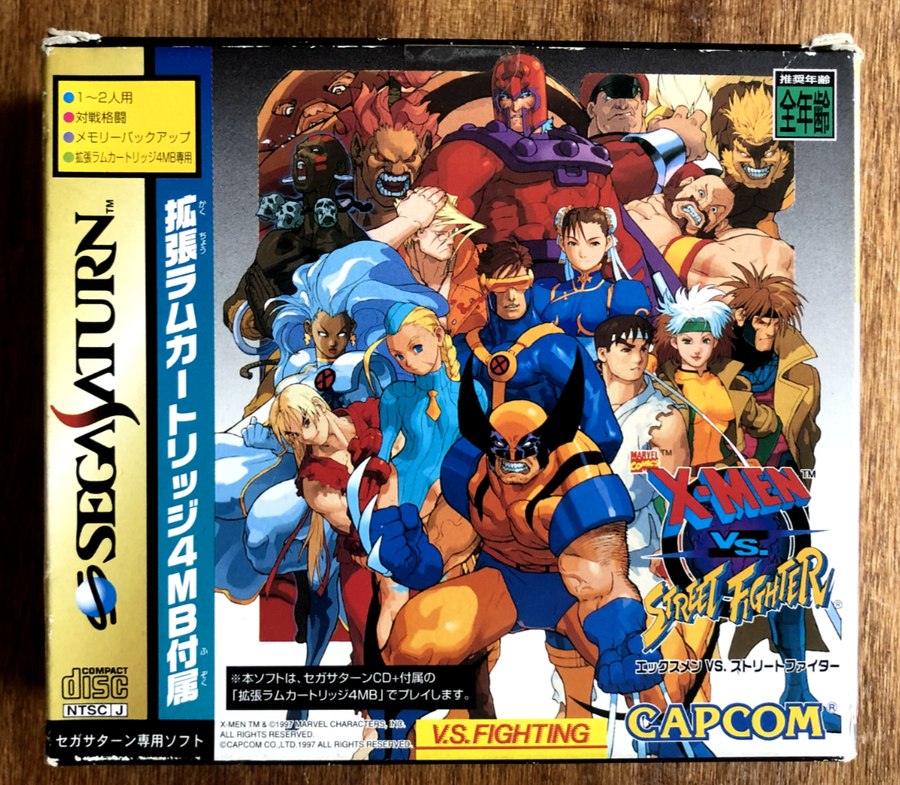
X-Men vs. Street Fighter American PlayStation box art
United States · PlayStation
America never got the Saturn version. This PlayStation box, same cast painting, no tag teams inside, is the box American buyers actually took home.
X-Men vs. Street Fighter Japanese Saturn box with 4MB RAM cartridge banner
Japan · Saturn
The Japanese Saturn box is a wide carton for a reason: the blue band down the side announces the bundled 4MB RAM cartridge the game cannot run without.

WHAT WAS CUT

In the record's own order
First, animation frames
Several frames of character sprite animation were removed to reduce RAM usage. Reviewers noticed immediately: a lower frame rate and a visible decline in animation quality, on top of frequent slowdown.
Then, the tag itself
Free switching between partners was omitted entirely. The second character only comes into play during certain attacks, such as Variable Combinations and Variable Counters. The partner became a special move, not a fighter.
Then, the match shape
The single round battles of the arcade and Saturn versions were replaced with a two out of three round setup, remaking the game in the shape of a conventional one on one fighter.
The workaround code
The port includes a code allowing pseudo tag team matches, on one condition: each player must use the opponent's starting character as their partner. Mirrored teams meant the same sprite data could serve both sides, the one arrangement the memory could afford.

WHAT THEY DID GET

The PlayStation version's own additions

The PlayStation version was not left empty handed. It added a Training Mode and a Survival Mode that no other version of the game has, and its Hyper Combo Gauge fills in roughly half as many hits as the arcade and Saturn versions, enabling more frequent combos. Game Informer and IGN both held that, judged on its own, it remained a solid fighting game.

The rest of the press was harsher, and the split is part of the record. GameSpot scored it 3.6 out of 10 against 7.4 for the Saturn import, Next Generation gave it one star out of five, and Electronic Gaming Monthly's team split between decent fun on its own merits and slowdown that killed any enjoyment. The aggregate sits at 64 percent on GameRankings. The tag team was the game; a version without it was always going to be judged as a fraction of the original, and it was.

The full story: The History of X-Men vs. Street Fighter →
MORE FROM THE FIGHTING GAMES ARCHIVE →
One shelf of eighty-two in the Library. Browse them all →

THE FIRST WORD

New pages and new pieces, first.