
The History of X-Men vs. Street Fighter
Capcom had already made two Marvel fighting games, X-Men: Children of the Atom in 1994 and Marvel Super Heroes in 1995. X-Men vs. Street Fighter, released in Japanese arcades in September 1996 on the CP System II board, did something neither had tried: it put Marvel's X-Men and Capcom's own Street Fighter cast in the same game, two fighters per side, and let players swap between them in the middle of a match. It is counted as the first game in the Marvel vs. Capcom series.
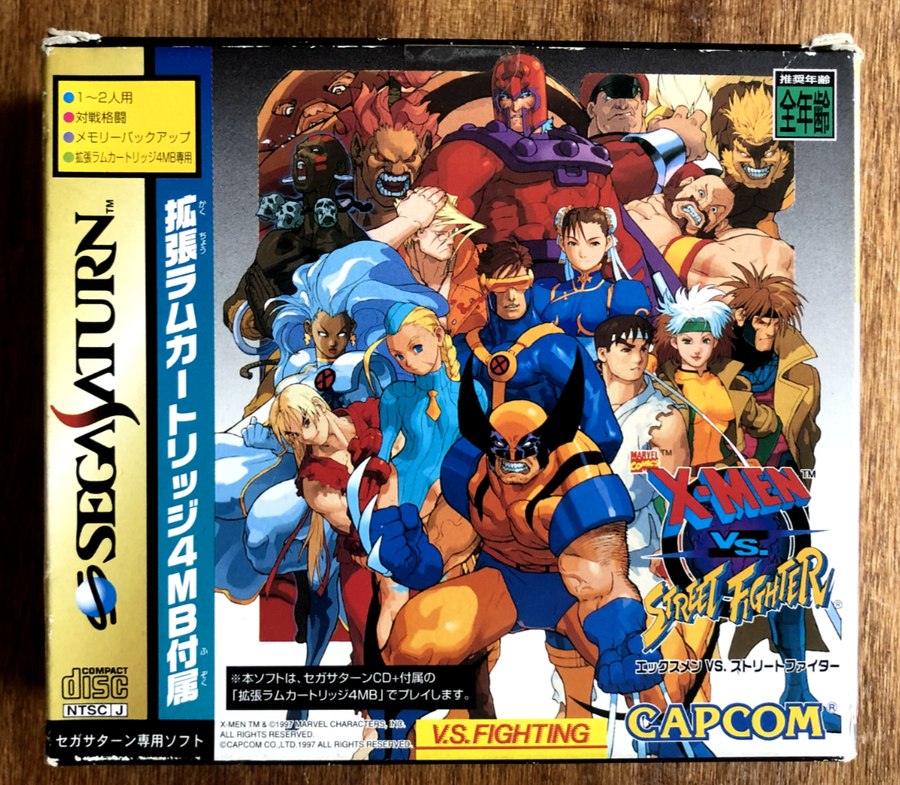
At home it became two different games. The Sega Saturn port, Japan only, used a bundled 4MB RAM cartridge to reproduce the arcade game almost exactly. The PlayStation port, the only version officially sold in America, cut the animation, cut the tag teams, and was received accordingly. Few games show the 1990s console gap more cleanly than this one game sold two ways.
THE TWO COVERS
Same painting, two very different games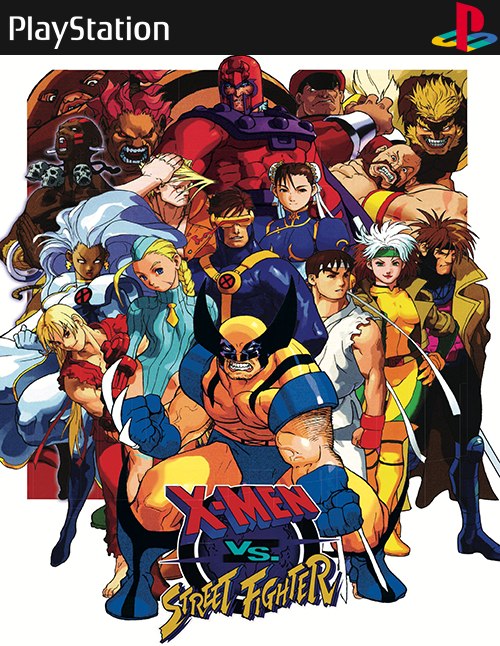
HOW IT WAS MADE
Tag teams, super jumps, and a screen filling HadoukenIn Japanese arcades the game landed at the top: Game Machine listed it as the most successful arcade game of October 1996. In North America it was only mildly popular at first, then caught on over several months and became a hit.
THE RELEASE
Arcade 1996, Saturn 1997, PlayStation 1998The Saturn version nearly stayed exclusive by design. In November 1996 Capcom announced the home version would be Saturn only, then, facing accusations of favoring the Saturn, said both versions would arrive together and both would be arcade perfect. Only one of them was. Why the Saturn game never crossed the Pacific, and what the cartridge actually did, have their own pages in this wing.
HOW IT WAS RECEIVED
Named scores, split by portThe criticism of the PlayStation port centered on the same two losses everywhere: the removed tag team battles, regarded as the game's defining feature, and frequent, dramatic slowdown that reviewers said threw off the player's timing.
WHAT IT LEFT BEHIND
The Versus series starts hereA sequel, Marvel Super Heroes vs. Street Fighter, followed in 1997, replacing most of the X-Men cast with wider Marvel names and introducing assists to the series. The line that began here became Marvel vs. Capcom, one of the defining fighting series of the next two decades.
The arcade original itself returned in the Marvel vs. Capcom Fighting Collection: Arcade Classics in September 2024, and in Arcade1Up home cabinets from 2020. The two 1990s ports have never been reissued. They survive as a matched pair of evidence: the same game, on the same shelf, showing exactly what a RAM cartridge could save and what its absence cost.