
Why Did X-Men vs. Street Fighter on Saturn Need the 4MB RAM Cartridge?
The short answer is arithmetic. A normal fighting game holds two characters in memory. X-Men vs. Street Fighter holds four: the two fighters on screen and both partners waiting off screen, each with a full set of animation frames, ready to enter in a single button press with no load and no pause. Add the backgrounds and the effects, and the arcade game's data simply did not fit in the Saturn's built in memory. Capcom's answer was to put the missing memory in the box.
This page is about this game's Saturn port specifically: what the cartridge held, what it bought, and what its existence cost the game outside Japan.
THE TWO COVERS
Same painting, two very different games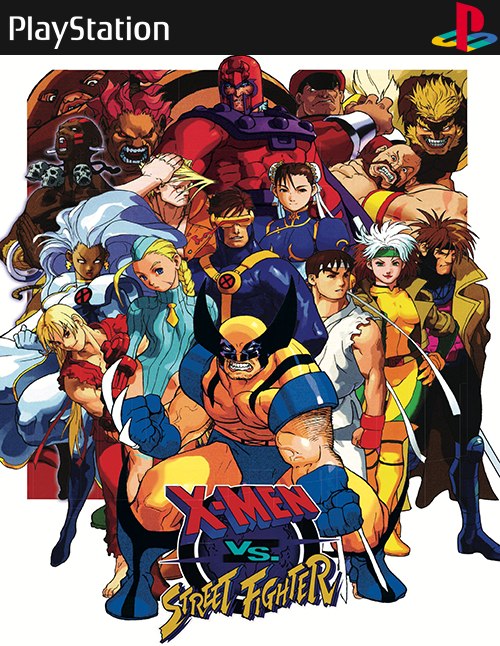
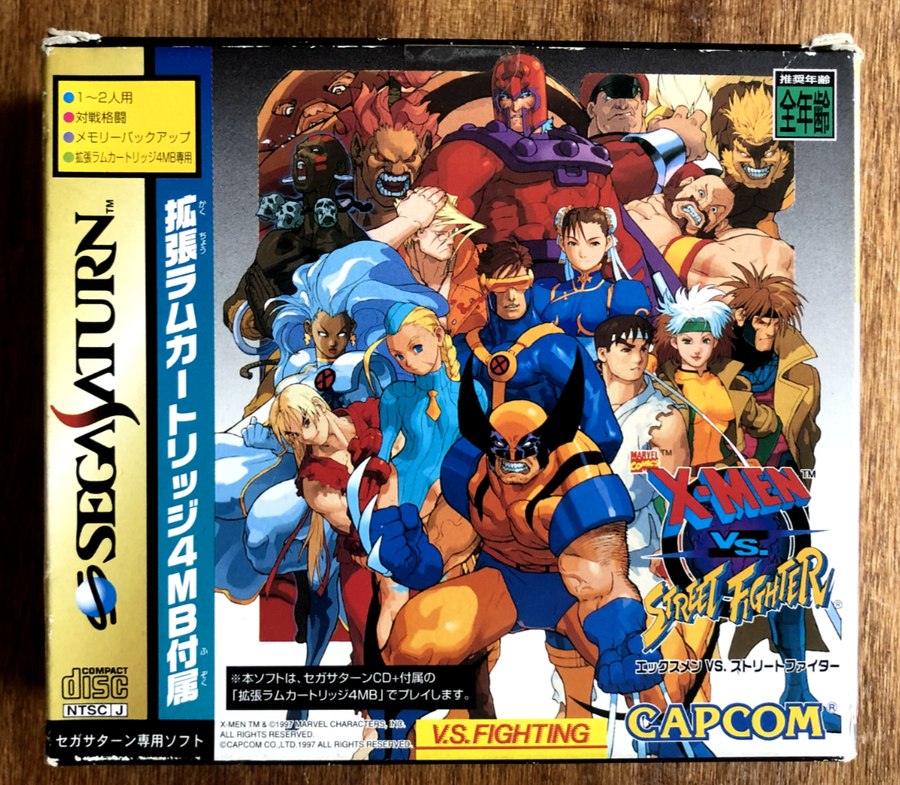
WHAT THE CARTRIDGE BOUGHT
The whole arcade game, intactWHAT THE CARTRIDGE COST
A Japan only releaseThe cartridge that saved the port also fenced it in. Capcom USA said the game would eventually come out in the United States, but Sega decided not to manufacture the 4MB RAM cartridge in the US, which presented a major obstacle to the release. Major American retailers were by then announcing they would clear out Saturn stock entirely in the second quarter of 1998, casting further doubt on the launch. The Saturn version was never officially released in North America; imported copies were sold at certain Electronics Boutique locations.
Europe took a different path to the same end. Capcom's usual European publisher, Virgin Interactive, was reluctant to release Capcom's Saturn games using the 4MB cartridge because of the prohibitive cost of manufacturing it. Sega licensed the game from Capcom intending to release it in Europe bundled with the cartridge, and those plans were eventually shelved.
What players outside Japan got instead was the PlayStation version, which solved the same memory problem the opposite way, by removing the tag teams. That trade is the subject of its own page in this wing.