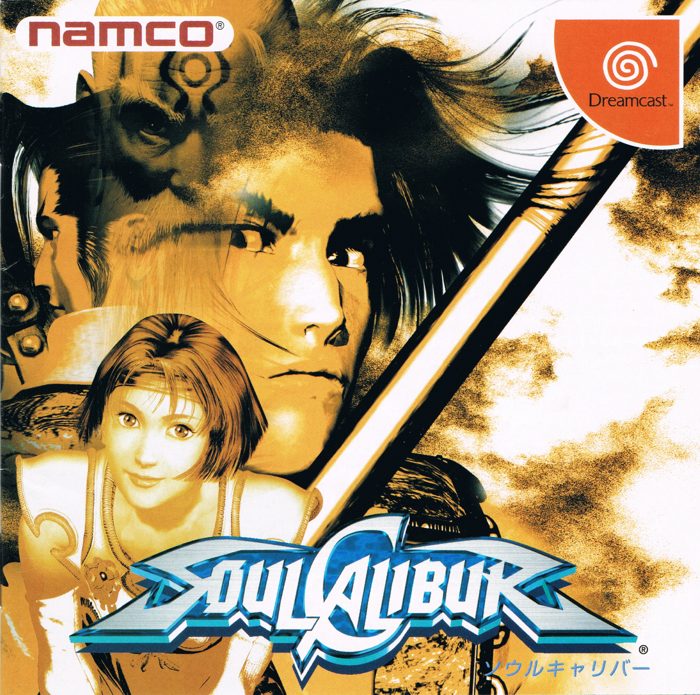
Why Is the Dreamcast SoulCalibur Better Than the Arcade Original?
Home conversions of arcade fighters were supposed to apologise. SoulCalibur on Dreamcast (1999) did the opposite: it rebuilt the arcade game's stages in full 3D, redrew its textures, added a campaign mode, and then collected the perfect scores, Famitsu 40 of 40, GameSpot 10, IGN 10, that the arcade original never received. This page lays out the three kinds of better: technical, content, and critical.
WHAT WAS REBUILT
Stages, models, texturesEurogamer's Digital Foundry Retro study of the conversion calls SoulCalibur perhaps the first home port to greatly outshine its arcade original, and itemises why. The arcade System 12 stages used flat 2D backdrops for their distant scenery; the Dreamcast version rebuilds all of them in full 3D polygons. Character models climb to roughly 4,000 polygons each, textures were redrawn at higher resolution, and the game holds a locked 60 frames per second while pushing on the order of a million polygons a second.
None of that was supposed to happen on a seven month schedule with a smaller team than the arcade original had. It happened because Namco treated the conversion as a rebuild, and because the Dreamcast was simply stronger hardware than the PlayStation based System 12 board the arcade game ran on.
WHAT WAS ADDED
A campaign the arcade never hadOn top of the arcade ladder, the Dreamcast version adds Mission Battle, a map based campaign of themed fights with special conditions that earns points to unlock artwork and costumes. It adds Team Battle, Survival, and Training modes, and it makes the boss Cervantes a playable member of the home roster. The arcade game is inside the Dreamcast version; around it sits a second, larger game.
The proof of how load bearing that extra content was came nine years later: the 2008 Xbox Live Arcade port, squeezed under Microsoft's download size limit of the time, cut Mission Battle entirely, and coverage of that port treated the cut as its defining flaw.
THE SCORES
The verdicts were given to the home versionEvery famous number attached to SoulCalibur was awarded to the Dreamcast version, not the arcade board: Famitsu 40 of 40, the magazine's second perfect score ever; GameSpot 10 of 10; IGN 10 of 10, a mark IGN did not award again for nearly a decade; 98 on Metacritic. The full record sits on the history page.
Arcade perfect used to be the ceiling for a home conversion. SoulCalibur is the game the phrase stopped fitting: the arcade version is the draft, and the Dreamcast version is the finished work.
THE GAME ON THE SHELF
SoulCalibur, on Dreamcast