
The History of SoulCalibur
SoulCalibur (arcade 1998, Dreamcast 1999) is Namco's weapon based fighter, the sequel in spirit to Soul Edge, and the game that sold the Dreamcast in its first months. Its home conversion rebuilt the arcade stages in full 3D, added a campaign mode the arcade never had, and collected perfect scores from Famitsu, GameSpot, and IGN on its way to 98 on Metacritic.
THE MAKING
Project Soul, and a prototype of a man running in a fieldSoulCalibur was built by Namco's Project Soul team under producer Hiroaki Yotoriyama, working closely alongside the Tekken team, whose series had already carried 3D fighting onto home consoles. The name is the studio's own coinage: a portmanteau of "soul" and "Excalibur", the legendary sword of King Arthur, chosen for a game about warriors hunting a sentient, soul eating blade.
The design began with movement, not weapons. Its eight way run, the freedom to circle an opponent in any direction, grew out of an internal prototype of nothing more than a character running around in a field. Yotoriyama's stated ambition for the finished game was to create "the greatest weapon based fighting action game in the world".
The arcade original ran on Namco's System 12 board and reached Japanese arcades on July 30, 1998. It succeeded on its own terms. What happened next is the reason this page exists: the home conversion did not merely match it.
THE DREAMCAST VERSION
Seven months, forty people, and a port that outgrew its originalNamco gave the Dreamcast conversion a deadline of about seven months and a team of roughly forty people, against the sixty who had built the arcade game. Instead of trimming the arcade stages down, the home team rebuilt them: where the arcade original flattened its distant scenery into 2D backdrops, the Dreamcast version renders every stage in full 3D polygons, giving the eight way run real depth to run into.
The conversion added content the arcade never had. The boss Cervantes joined the home roster, and around the arcade ladder Namco built Mission Battle, a long campaign of themed fights that unlock art and costumes, plus Team Battle, Survival, and Training modes. The full case is laid out on this shelf's companion page, why the Dreamcast version is remembered as better than the arcade original.
THE RELEASE
A launch title in America, a month earlier in JapanJapan came first: the Dreamcast version released there on August 5, 1999. In North America it arrived on September 9, 1999, as one of the Dreamcast's launch titles, the fighting game the new machine was demonstrated with. Europe followed on November 26, 1999.
It sold like a system seller because it was one: over one million copies by December 1999, and about 1.3 million in total, making it the second best selling game on the Dreamcast.
THE COVERS
Japan and America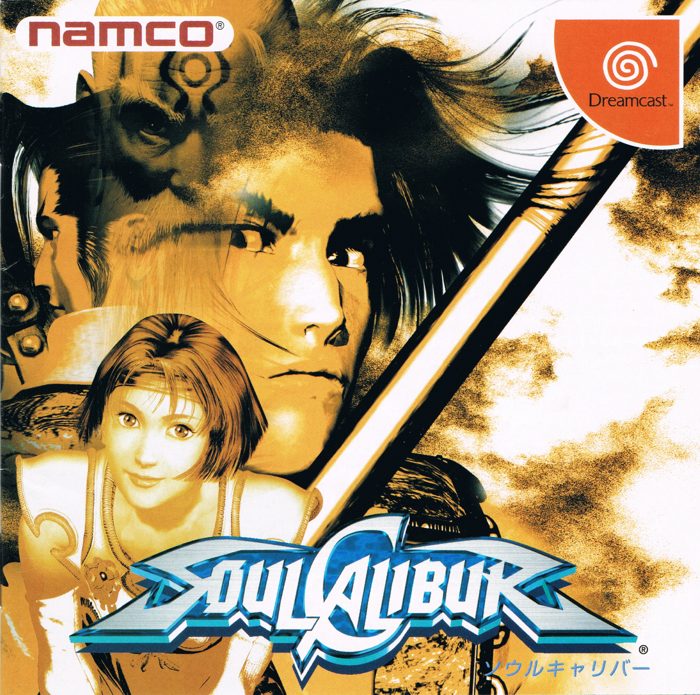
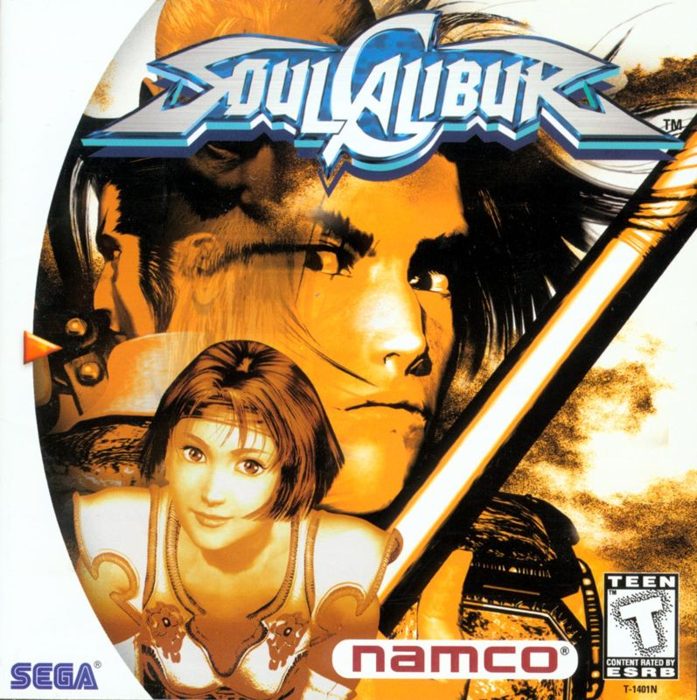
The art does not change between regions; the finish does. Japan's box washes the arcade painting in gold, with Namco's own logo riding at the top, while the American box prints the same faces in full colour for the launch shelf. One small content note travels with the versions: the North American release removes one of Voldo's codpieces, which the Japanese and European versions keep.
THE RECEPTION
The perfect score shelfThe reviews are the headline. Famitsu gave the Dreamcast version a perfect 40 of 40, only the second game in the magazine's history to receive it, after The Legend of Zelda: Ocarina of Time. GameSpot scored it 10 of 10. IGN scored it 10 of 10, a rating IGN did not hand out again for nearly a decade, until Grand Theft Auto IV in 2008. The aggregates settled at 98 on Metacritic and about 96 percent on GameRankings.
Next Generation gave it five stars and called it, in Blake Fischer's words, the "reason enough to own a Dreamcast". It won the 1999 E3 Game Critics award for Best Fighting Game, and the Academy of Interactive Arts and Sciences named it both Console Game of the Year and Console Fighting Game of the Year.
THE LEGACY
Nine years on one machineNo other console saw the game until July 2, 2008, when it arrived on Xbox Live Arcade, based on the European Dreamcast version, and even that port removed Mission Battle. It reached iOS in 2012 and Android in 2013, and the Xbox version was delisted in February 2022. Why the wait ran so long, and why the complete version never left the Dreamcast at all, is the second question on this shelf: why SoulCalibur stayed a Dreamcast exclusive for so long.
The series itself moved on without looking back: Soulcalibur II went multiplatform in 2002, and the original stayed where Namco had left it, on the machine it had helped launch.