
Why Was Virtua Fighter 4's Training Mode So Influential?
It was the first training mode built like a curriculum: glossary, drills, feedback, and frame data in one place.
Before 2002, a fighting game's training mode was usually a room, a dummy, and a move list. Virtua Fighter 4's was a school. Its structure is documented in detail, and its influence is visible in nearly every serious training mode shipped since.
THE SYLLABUS
What was insideAn encyclopedia
A glossary of fighting game terms and mechanics, explained in game: the vocabulary of the genre, taught by the game itself.
Command Training
A complete run through a character's moves, one by one, with the command displayed, the option to skip, a computer demonstration on request, and advice when you struggled.
Trial Mode
Structured lessons on the game's mechanics and recommended combos, including alternative options for when a combo failed, so a dropped combo became a branch, not a dead end.
Frame level tools
Detailed input timing displays and slow motion for frame counting: data that had previously lived in Japanese guidebooks, on the console, in the mode.
Free Training
The open laboratory around the lessons, with a customizable dummy, completing the three section structure.
WHY IT SPREAD
The templateThe influence is structural. Modern training modes, with their move by move drills, on screen input histories, frame data displays, and tutorial trials, follow the syllabus Virtua Fighter 4 published in 2002: teach the terms, drill the commands, explain the failures, show the numbers. AM2 built it because Virtua Fighter's depth was its selling point and its barrier at once. The mode is the bridge, and the genre has been crossing it ever since.
THE GAME ON THE SHELF
Virtua Fighter 4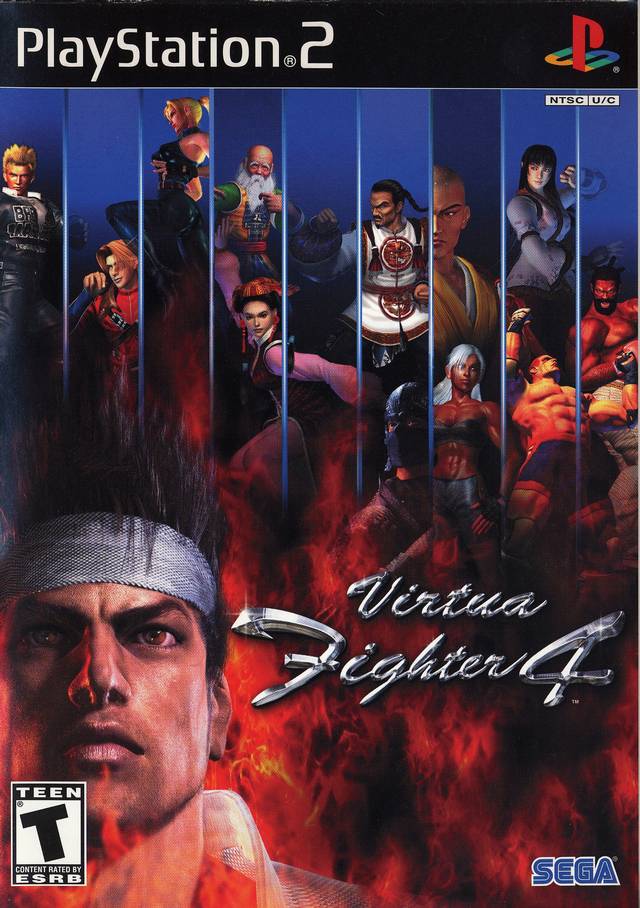
Virtua Fighter 4 · America · PlayStation 2
Akira Yuki below the cast in blue bands on the American box, for the game whose training mode taught the genre how to teach.