
The Final Fantasy Gallery
Two beginnings, ten years apart, and the widest cover gap in the series.
In December 1987, a small team at Square released a Famicom role-playing game under a name chosen for its initials. Ten years later, its seventh sequel left Nintendo for the PlayStation, bet the company on computer generated film, and carried the Japanese RPG to the whole world. Final Fantasy and Final Fantasy VII are the two ends of that arc, and this shelf holds both.
Every cover below is a door. Behind the VII covers sits the game's history: how it was made, how it was released, and how its own era received it. Behind the 1987 covers sits the question the whole series is named for. Start anywhere. The doors all open.
FINAL FANTASY VII
Square · PlayStation · 1997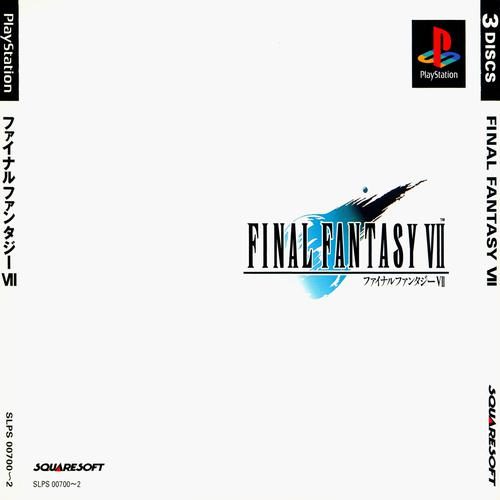
Japan · 1997
Japan sold the game on a logo alone: Yoshitaka Amano's Meteor mark on a white field, no characters, no scene. Three discs, and nothing else on the box needed saying.
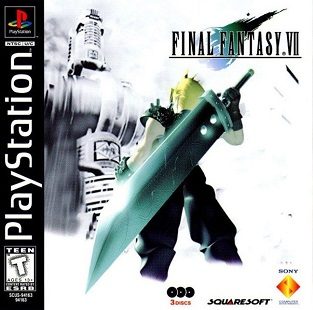
America · 1997
America got the hero instead: Cloud Strife, back to the camera, Buster Sword in hand, facing the Shinra Building. The two boxes could not be further apart.
The History
The move from Nintendo 64 to PlayStation, the full motion video bet, and a 92 on Metacritic: how Final Fantasy VII was made, released, and received.
The Ehrgeiz Question
Why are Final Fantasy VII characters in Ehrgeiz? Because it was Square's own fighter, and VII was Square's biggest property on Earth.
FINAL FANTASY
Square · Famicom and NES · 1987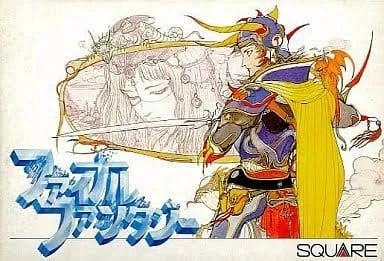
Japan · Famicom · 1987
The first box of the series is a painting: Amano's Warrior of Light in his horned helmet, sword drawn, with Princess Sarah framed behind him.
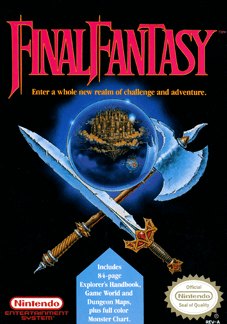
America · NES · 1990
America waited until 1990 and got heraldry instead: a crystal ball above a crossed sword and battle axe, with no characters on the box at all.
The Music
How did Final Fantasy music get its own concert tours? A 1989 suite, a sold out Tokyo concert in 2002, and the Distant Worlds world tour.