
How can you tell a first printing of My Hero Academia?
The answer is printed in the back of the book: the colophon never lies.
Japanese tankobon carry their printing history in the colophon, the publisher’s block on the last pages. For a Jump Comics volume like My Hero Academia, the colophon prints the issue date of the first printing and, on later printings, adds the printing number and its own date. A true first printing is the copy whose colophon shows only the first-printing line, dated with the volume’s release: for volume 1, 4 November 2014.
Two supporting checks. First printings were sold with their obi, the paper band around the dust jacket, and complete copies keep it. And the dust jacket itself should be the original: the covers in the gallery are the reference set, verified volume by volume.
THE METHOD
Three checks, in order1 · The colophon
Open the back of the book. The colophon names Shueisha, the Jump Comics imprint, and the printing dates. A single earliest date, matching the release date, is a first printing; a numbered later printing is a reprint, however clean.
2 · The obi
The promotional paper band is the first casualty of reading. A first printing with its obi intact is the complete object; a band from a later campaign on an early book is a mismatch worth noticing.
3 · The jacket
Compare the cover against the verified gallery. All 42 Japanese covers are pictured there with their dates, so any swapped or later-edition jacket shows itself.
THE VOLUMES THAT MATTER MOST
Where the check pays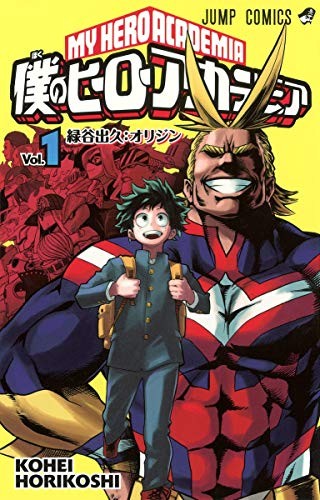
Volume 1 · 2014
The book everyone checks: released 4 November 2014, before the anime existed, when the series was four months old.
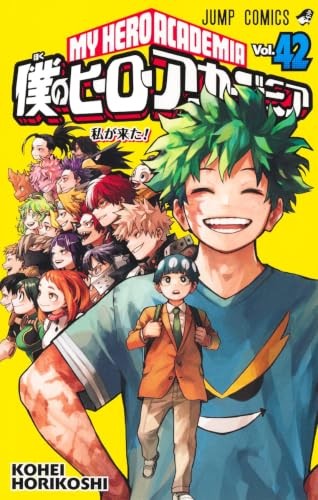
Volume 42 · 2024
The last first printing: 4 December 2024, and the only source of chapter 431.
English copies
Viz volumes carry their own printing line on the copyright page: “First printing” and the month and year are stated outright. Volume 1’s English first printing is August 2015.