The History of Halo 2
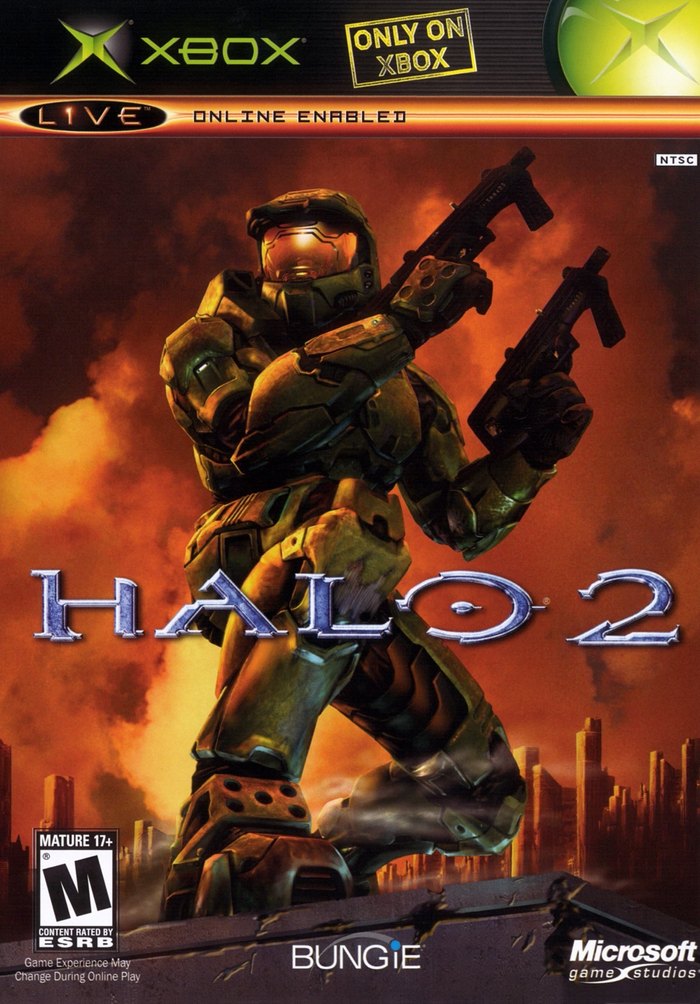
Halo 2 (Xbox, 2004) took the first game's local multiplayer and put it online, inventing the matchmaking playlist system console shooters still use. It earned $125 million in its first 24 hours, then the largest entertainment launch in American history, and sold 8.46 million copies, more than any other game on the original Xbox. It also shipped with a cliffhanger its own studio had not planned, the scar of a development that nearly broke the team.
THE MAKING
Ambition, then the crunchHalo had never been planned as a trilogy, but five million copies made a sequel inevitable; Xbox general manager J Allard confirmed Halo 2 at E3 2002, aiming for Christmas 2003. Designer Jaime Griesemer recalled that the team "tripled everything": a rebuilt engine, a new physics engine, and cut ideas from the first game restored at larger scale. Writer Joseph Staten described the result as ordering a giant sandwich and taking a bite before realising how big it was.
Leadership was the weak point. Project lead Jason Jones, burned out from the first game, drifted to another project; co-founder Alex Seropian left in 2002; small teams worked without talking to each other, and some finished assets were duplicated or cut. The celebrated E3 2003 demonstration was built for the show rather than taken from a working game. To ship on November 9, 2004, Bungie cut the campaign's final act, which is why the game ends mid-scene: Bungie has said on the record that the cliffhanger was a product of the rush, not the plan.
The marketing invented a form of its own. I Love Bees, an alternate reality game run through payphones and a hacked website in the summer of 2004, is now counted among the first of its kind at blockbuster scale.
THE DESIGN
Two soldiers, one war, online at lastThe campaign alternates between the Master Chief and the Arbiter, a disgraced Covenant commander, so the war is told from both sides of the trigger. Small weapons can be dual wielded, trading accuracy and grenades for firepower, and vehicles can be hijacked in motion. The visible health bar disappeared; the recharging shield now carries the whole survival system.
Multiplayer is the lasting design. The first game's fans had linked consoles with cables to reach sixteen players; engineering lead Chris Butcher's team asked whether that experience could be brought to everybody. Instead of server lists and manual lobbies, Halo 2 introduced matchmaking playlists: choose the kind of game you want, and the system finds the players, the map, and the rules, with a skill ranking underneath. Lobbies, parties, and clans followed the same logic. These systems became the industry standard, and Halo 2 held the title of most popular game on Xbox Live until Gears of War passed it nearly two years later.
THE EDITIONS
Steelbooks and second livesTHE RECEPTION
Acclaim, with the dissent keptThe launch rewrote record books: 1.5 million pre-orders, $125 million in the first day, five million copies in three weeks. By June 2006, more than 500 million games of Halo 2 had been played on Xbox Live. In Japan the same game was a prestige object on a small platform: released November 11, 2004, it sold 45,917 copies lifetime, eighth on the original Xbox there. The Library's Halo in Japan page holds the full Japanese record.
THE LEGACY
The birth of the modern blockbuster gameThe Ringer has called Halo 2 "the birth of the video game as we know it today: a mass shared experience," crediting it with modern multiplayer infrastructure and the popularising of American esports. When the original Xbox Live shut down in April 2010, a small group of players kept their consoles running for weeks to stay in the last Halo 2 matches, the final session ending on May 10. An unofficial replacement service, Insignia, brought the original servers back in 2024.
THE GAME ON THE SHELF
Halo 2 · Xbox