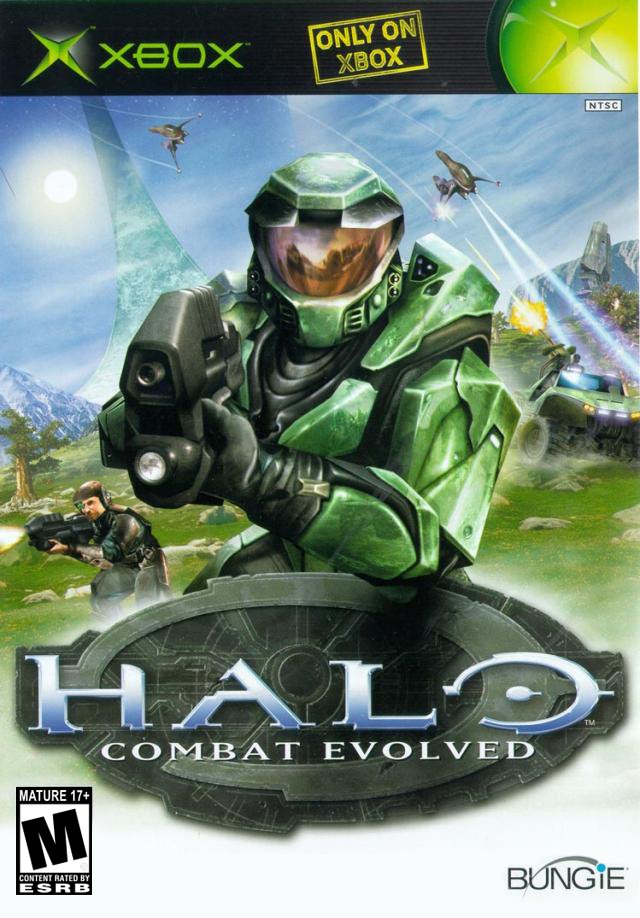
The History of Halo: Combat Evolved
Halo: Combat Evolved (Xbox, 2001) began as a real-time strategy game for home computers, was unveiled by Steve Jobs, and was rebuilt as a first-person shooter in about nine months after Microsoft bought its studio. It launched the Xbox on November 15, 2001, sold more than six million copies, and set the template console shooters still follow: a recharging shield, two weapons at a time, and vehicles you drive yourself.
THE MAKING
Bungie, 1997 to 2001Development began in 1997 at Bungie in Chicago, as a science fiction real-time strategy game built on three-dimensional terrain. Experimenting with camera control, the team kept moving the view closer to individual units until, by mid-1998, the game had become a third-person shooter. On July 21, 1999, Bungie unveiled it at the Macworld Conference, with Steve Jobs announcing a simultaneous Mac and Windows release.
Money changed the plan. After a costly product recall hurt the studio, Bungie looked for a buyer, and Microsoft, assembling the launch line for its first console, acquired the company on June 19, 2000. Halo was now the Xbox's tentpole title, and Bungie had roughly nine months to finish it. Designer Jason Jones pushed the perspective from third person to first person; designer Jaime Griesemer wrote aim and movement assistance so the game would play well on a gamepad, then a rare thing for a shooter.
The cuts were drastic. The open-world plans were scrapped, one level was replaced by a cutscene, and the online multiplayer was dropped entirely because Xbox Live was not ready; the local multiplayer that shipped was rebuilt from scratch four months before release. Even the title was a compromise: Bungie refused to rename the game, so Microsoft's marketers added the subtitle Combat Evolved to make it sound like the military games it would sit beside.
THE DESIGN
Shields, two weapons, and a chantThe rules Halo set are now genre furniture. The Master Chief's energy shield recharges when he stays out of fire, so retreat became a tactic instead of a death sentence. Players carry only two weapons, which turns every pickup into a decision. Grenades and melee work without holstering the gun. And the world is full of vehicles, from the Warthog jeep to alien hovercraft, all drivable, with the camera pulling back to third person when you climb in.
Composer Martin O'Donnell, working with Michael Salvatori, scored the Macworld debut in a rush: told the music should feel ancient and mysterious, he chose Gregorian chant and sang on the theme himself. For the game he built loops that could be disassembled and recombined so the music could follow the fighting instead of sitting on top of it, and he used silence as an instrument, holding music back so its return would land.
Local multiplayer carried the game between campaign sessions: split screen for two, and up to sixteen players by linking four Xbox consoles, a first for a console game, impractical and beloved in equal measure.
THE EDITIONS
One launch, a long tailTHE RECEPTION
Acclaim, with the dissent keptThe commercial record matched the reviews. In the two months after launch, Halo sold alongside more than half of all Xbox consoles; it passed one million copies in about five months, three million by July 2003, and more than six million by November 2005, the second best-selling game on the platform. Its world expanded immediately: Eric Nylund's prequel novel The Fall of Reach, written in seven weeks and published weeks before the game, became a Publishers Weekly bestseller.
THE JAPAN THREAD
The Library's spine for this laneJapan is where this game's collector story lives, and the Library documents it on its own pages rather than repeating it here: the late arrival on a console that sold under half a million machines, the Famitsu 33/40 (scored 9, 8, 7, 9), the third best seller standing on the platform, and a Japanese box that shares nothing with the American painting but the name. Start with How was Halo released in Japan? and the covers compared.
THE GAME ON THE SHELF
Halo: Combat Evolved · Xbox