
The History of Tekken 5
Tekken 5 is a 2004 fighting game developed and published by Namco, the fifth main entry in the series and its tenth anniversary release. It is set shortly after Tekken 4: Jinpachi Mishima, the founder of the Mishima Zaibatsu, long imprisoned beneath Honmaru, breaks free and seizes the company, and the fifth King of Iron Fist Tournament is declared.
The game is remembered for two things at once. As a fighter, it reversed the most criticized experiments of its predecessor and returned the series to form. As a package, its PlayStation 2 version was a small museum: the arcade versions of the first three Tekken games, playable on the disc.
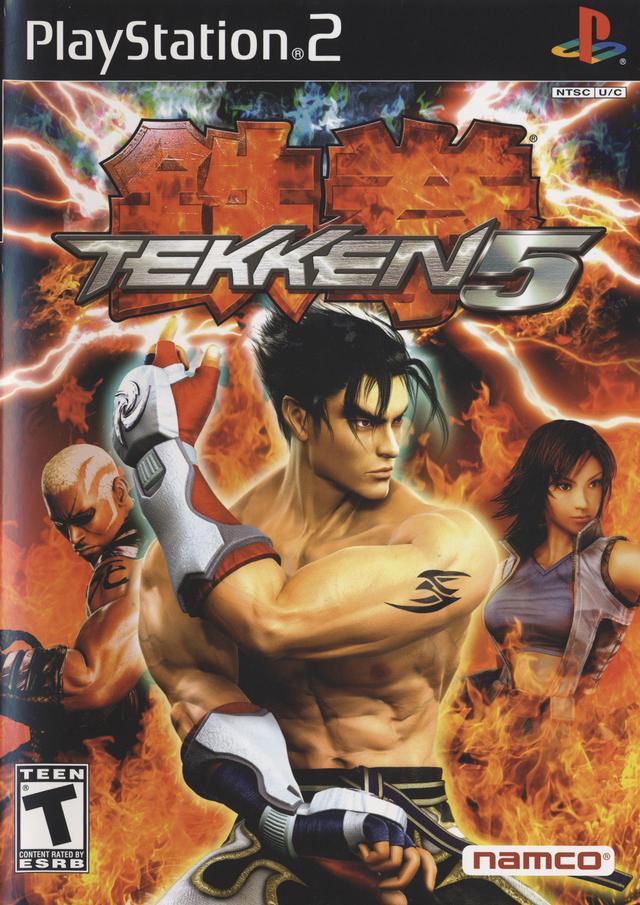
THE TWO COVERS
Japan and America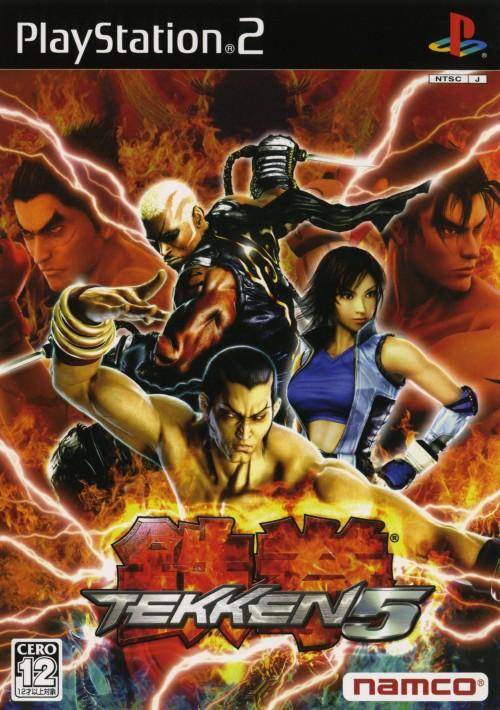
HOW IT WAS MADE
Namco System 256, 2004Tekken 5 was built for the Namco System 256 arcade board and directed by Masahiro Kimoto with series producer Katsuhiro Harada. The design brief was restoration. Tekken 4 had introduced uneven stage floors, position changes, and a slower, more deliberate pace; Tekken 5 removed the raised and lowered floors outright, restored the faster movement and juggle game of the earlier titles, and kept only Tekken 4's walls, with wall juggling made harder to abuse and easier to defend against.
New systems layered onto the restored base. The crush system gave attacks properties against whole classes of moves, so a jumping attack could pass clean over lows. Character customization arrived in the series for the first time: fight money bought costume colors, alternate outfits, and accessories. The roster reached 32 fighters, with newcomers Asuka Kazama, Feng Wei, and Raven, and Devil Jin playable as Jin's alter ego. The final boss, Jinpachi, was widely criticized then and since for overwhelming power.
THE RELEASE
Arcade 2004, PlayStation 2 2005The arcade game launched in Japan on 16 November 2004 and spread worldwide that December. The PlayStation 2 version followed in North America on 25 February 2005, in Japan on 31 March 2005, and in Europe on 24 June 2005. Namco marked the anniversary in America with a limited bundle at $99.99 pairing the game with a Hori arcade stick and a six disc collector case for the whole series.
The home version's extras ran deep: the Devil Within side game, a beat em up following Jin, received a lukewarm welcome next to the main game, but the disc's archive did not. The arcade versions of Tekken, Tekken 2, and Tekken 3, plus Namco's 1995 arcade shooter StarBlade, were included, the first time the arcade originals had been playable on a home console. The arcade game itself was refined twice more, as Tekken 5.1 and then Tekken 5: Dark Resurrection.
HOW IT WAS RECEIVED
The scoresWHAT IT LEFT BEHIND
The restoration as templateTekken 5 set the series' modern pattern: honor the classic movement, layer customization and archives on top, and never again rebuild the floor game from scratch. Its bundled arcade originals also set an expectation that anniversary releases should carry their own history with them, a standard this Library's gallery pages exist to document.