
The History of the Tales Series
Thirty years, seventeen mothership titles, one battle system: how a Super Famicom experiment became one of Japan’s defining RPG institutions.
The series began on December 15, 1995, when Tales of Phantasia reached the Super Famicom. It was made by Wolf Team, a developer inside Telenet Japan, and published by Namco. Its designer, Yoshiharu Gotanda, had built the story from an unpublished novel draft, and its real-time battles, a fighting game’s instincts inside an RPG, set the template every later game would inherit.
Bandai Namco counts seventeen mothership titles between Phantasia and 2021’s Tales of Arise, alongside a second tier of spin-offs the company calls escort titles. By 2024 the series had shipped over 30 million copies. For most of that life, the West saw only part of the picture; this shelf documents the whole of it.
THE WOLF TEAM YEARS
1995 to 2002A novel becomes a cartridge
Gotanda wrote and programmed Phantasia at Wolf Team. The game that resulted paired anime presentation and recorded voices with the Linear Motion Battle System, real-time combat on a scrolling 2D line, at a moment when nearly every rival RPG still took turns.
Destiny builds the template
Tales of Destiny (1997) added the pieces that defined the brand: skits, cooking, titles for characters, and the first of the series’ “characteristic genre names”, every mothership title carries a poetic subtitle, Destiny’s being “RPG of Destiny.” It sold roughly 1.63 million copies and stood for decades as the series’ best seller in Japan.
Eternia, and a borrowed name
Tales of Eternia (2000) was the third mothership title, but North America received it in 2001 as “Tales of Destiny II,” a name belonging to a different game entirely. The true Destiny 2 followed in Japan in 2002 and never left.
THE STUDIO ERA
2003 to 2011Wolf Team becomes Tales Studio
The Wolf Team core was renamed Namco Tales Studio and remained the series’ primary developer until 2011, when it was absorbed into Bandai Namco Studios. The mothership line it shipped in those years, Symphonia, Rebirth, Legendia, the Abyss, Innocence, Vesperia, Hearts, Graces, is the heart of the series.
Symphonia takes the West
Tales of Symphonia (2003) was the breakthrough outside Japan: the GameCube game that turned a Japan-first series into a worldwide one. Its PlayStation 2 port, with added content, stayed in Japan, an early lesson in how different the two markets’ shelves could be.
Anniversaries as landmarks
The studio marked the decades with games: the Abyss for the 10th anniversary (2005), Xillia for the 15th (2011), Zestiria for the 20th (2015). The calendar became part of the series’ identity.
THE MODERN SERIES
2011 to today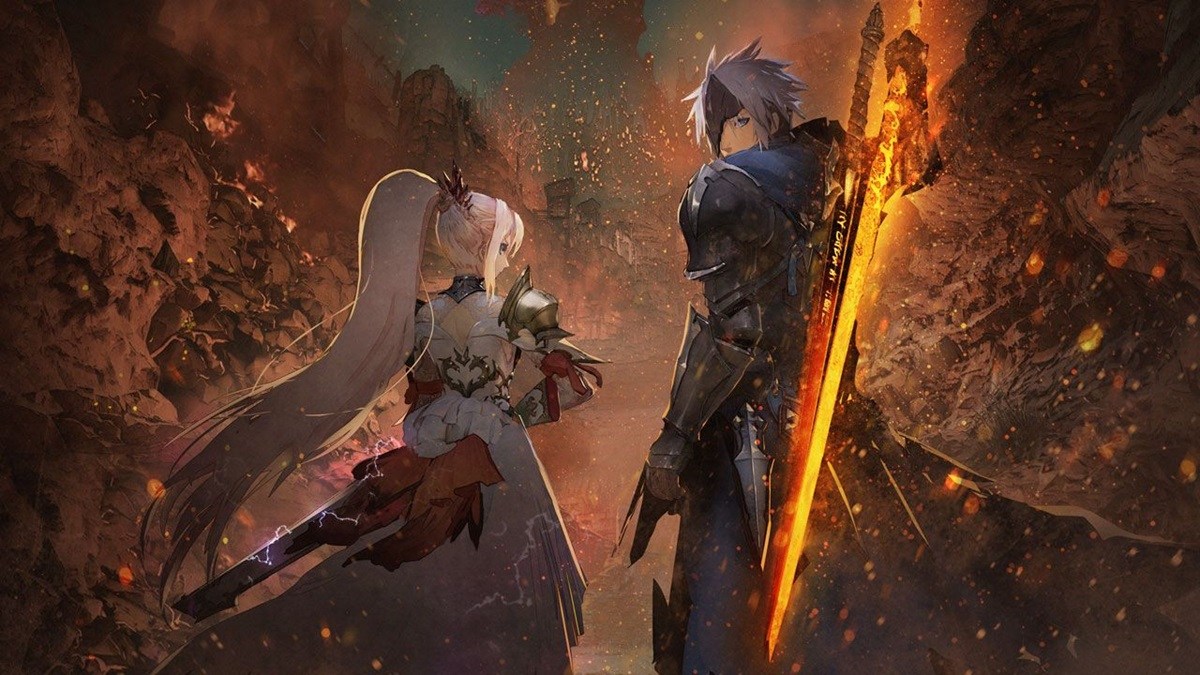
Arise, the worldwide launch
Tales of Arise (2021) was the first entry launched essentially simultaneously around the world. It shipped a million copies in under a week, the fastest start in series history, passed three million by February 2024, and won Best RPG at The Game Awards 2021.
The remaster era
For the 30th anniversary Bandai Namco launched the Remastered Project: Graces f (January 2025), Xillia (October 2025), Berseria (February 2026) and Eternia (October 2026), with older classics promised next and a brand-new Tales confirmed in development.
Two shelves, one series
Around the seventeen mothership titles orbits everything else: escort games, anime, manga, stage festivals, and a decade of mobile titles. The Tales shelf in this Library is organized the same way, mothership first, then the branches.
READ THE DEEP DIVES
Already on this shelfThe History of Tales of Phantasia
The 1995 original in depth, and how it fit a sung theme song onto a cartridge.
The History of Tales of Destiny
The 1997 game that built the template, and the remake Japan kept.
The History of Tales of Symphonia
The GameCube breakthrough that carried the series West.
The History of Tales of the Abyss
The 10th-anniversary title and its story of a hero remaking himself.
Why did Symphonia’s PS2 port stay in Japan?
The added-content port the West never received, examined on its own page.