
The Castlevania Gallery
One castle, five hunts, two shelves of boxes.
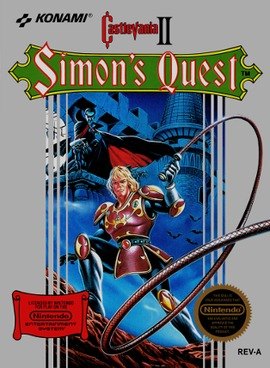
In Japan the series is Akumajo Dracula; in America it is Castlevania, a name one executive coined because the original sounded too religious to ship. The boxes tell the same double story as the games: twice the two regions shared one painting in different frames, twice they commissioned completely different art, and once America threw the painting away and sold a silhouette instead.
Every cover below is a door. Behind it sits the game's history, how Konami made it and how its own era received it, and behind that, the questions its fans still ask. Start anywhere. The doors all open.
CASTLEVANIA
Konami · Famicom Disk System / NES · 1986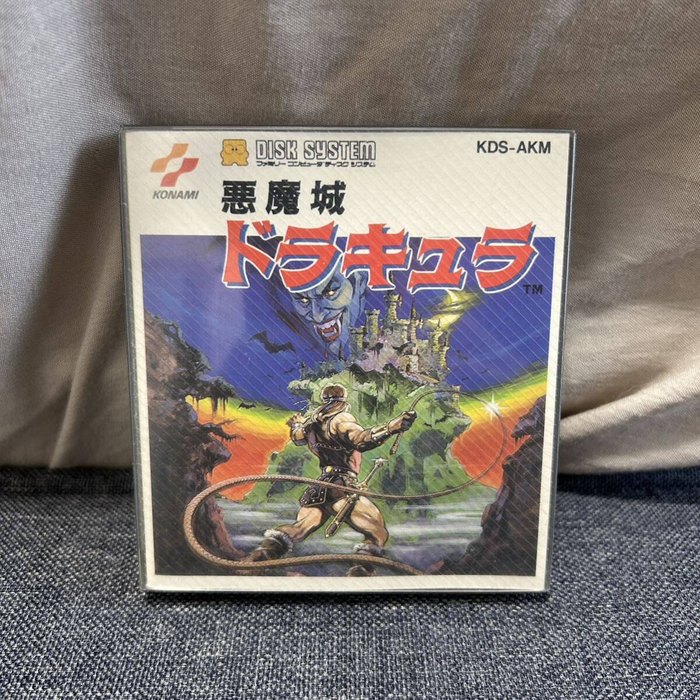
Japan · 1986
The full painting edge to edge under the red Akumajo Dracula lettering: Simon from below, whip cracking toward the castle, Dracula's fanged face in the night sky.
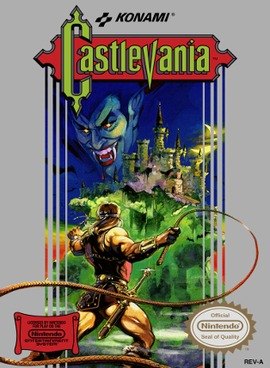
America · 1987
The same painting, cropped inside Konami's silver pinstripe NES frame. One painting served both boxes.
The History
How Castlevania was made, and how it was received: Akamatsu's horror film, the tandem MSX2 game, and the scores.
The Inspiration
What inspired Castlevania? A director who wanted you inside a classic horror film, and a whip from Raiders.
The Name
Why is Castlevania called Akumajo Dracula in Japan?
CASTLEVANIA II: SIMON'S QUEST
Konami · Famicom Disk System / NES · 1987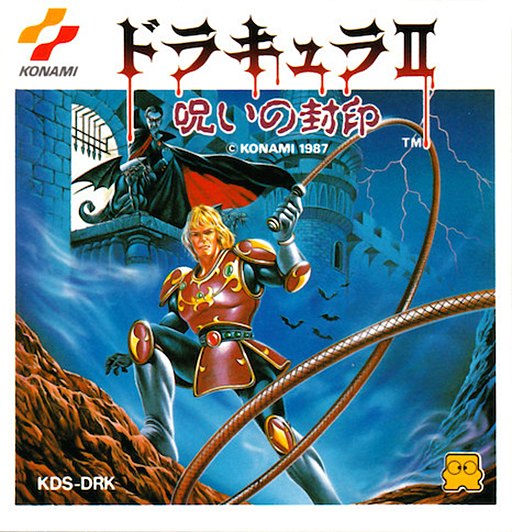
CASTLEVANIA III: DRACULA'S CURSE
Konami · Famicom / NES · 1989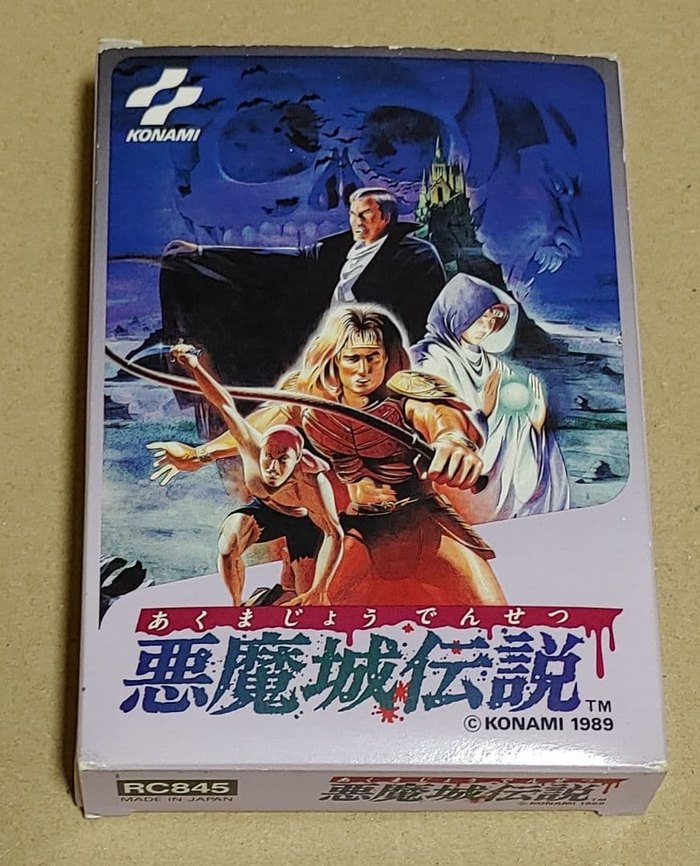
Japan · 1989
Akumajo Densetsu. The whole party in one blue night composition: Trevor, Grant and Sypha, a giant skull and Dracula's profile in the sky.
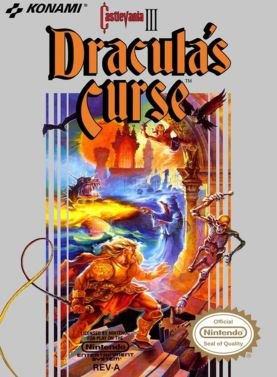
America · 1990
A warmer, orange painting by Tom duBois: Trevor against a skeleton, Sypha casting fire. Completely different art from Japan's.
The History
How Dracula's Curse was made, and how it was received: branching paths, three companions, and the VRC6 sound chip the West never heard.
The Art Style
Where does Castlevania's art style come from? Famicom paintings, duBois, and Kojima.
The Guides
How do the Japanese Castlevania guides differ from the American ones?
CASTLEVANIA: SYMPHONY OF THE NIGHT
Konami · PlayStation · 1997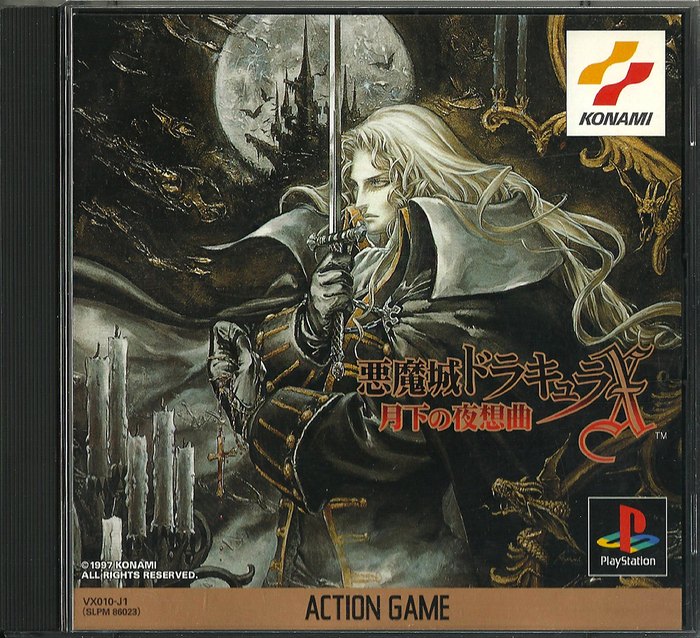
Japan · 1997
Ayami Kojima's Alucard in profile, sword raised before his face, candles and a cross at his side.
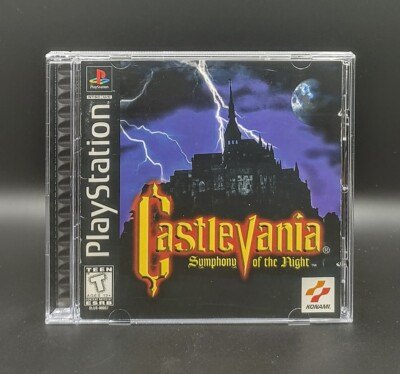
America · 1997
No character at all: a black castle silhouette under a purple lightning sky. Europe used Kojima's painting, so it was the US box that dropped it.
The History
How Symphony of the Night was made, and how it was received: the bargain bin insight, Kojima's debut, the Saturn port, and the genre it named.
The Japanese Version
How is the Japanese Symphony of the Night different from the American one?
The Guides
Three official guides for one game in Japan. One, plus an unauthorized rival, in America.
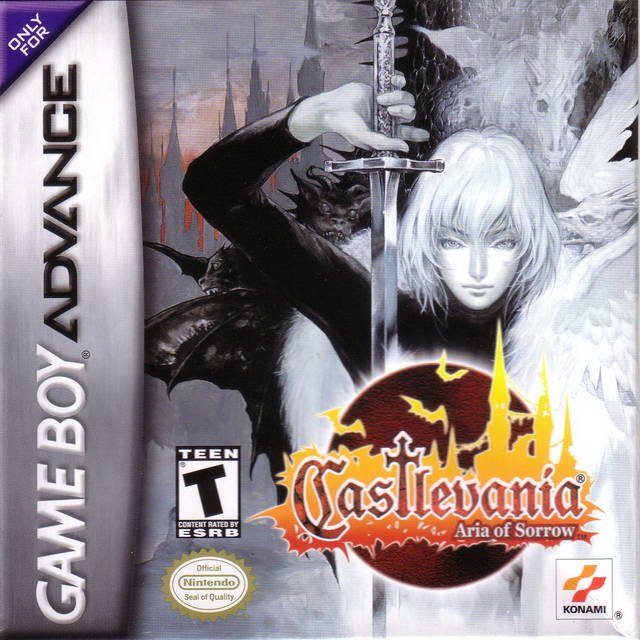
CASTLEVANIA: ARIA OF SORROW
Konami · Game Boy Advance · 2003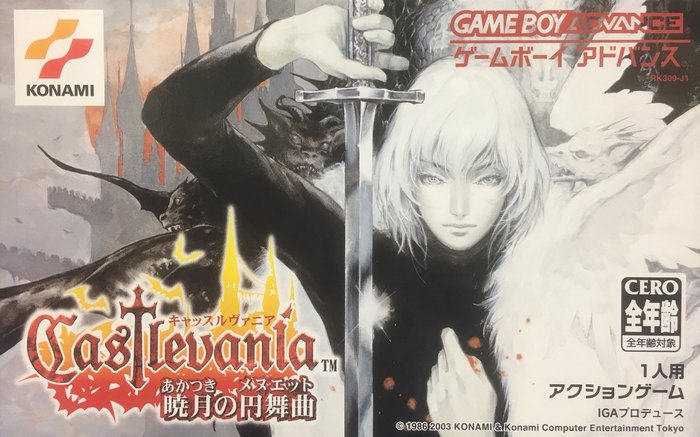
CASTLEVANIA: RONDO OF BLOOD
Konami · PC Engine Super CD-ROM2 · 1993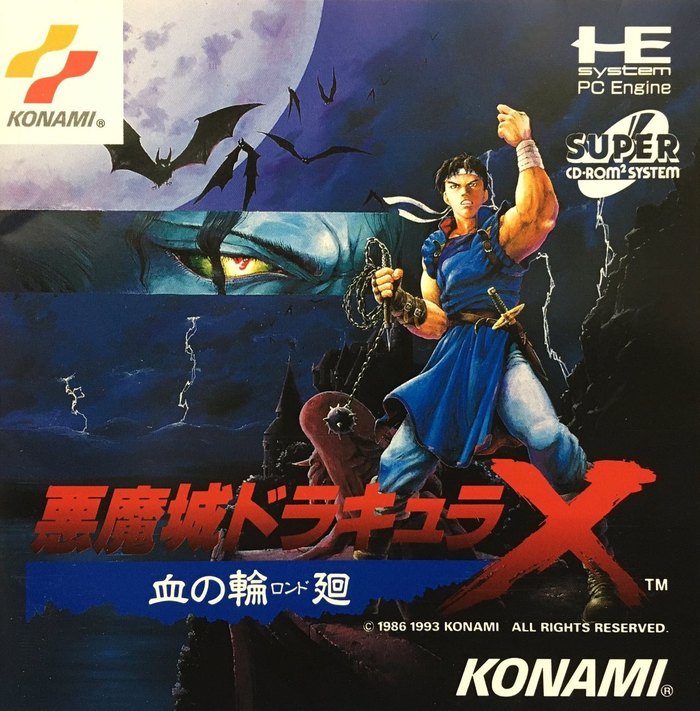
Japan · 1993
Akumajo Dracula X: Chi no Rondo. Richter in blue, fist raised on the cliff, Dracula's single yellow eye watching from a band across the middle of the painting.

America · Never released
No American box exists: the original was never released in the West. America got Dracula X on the Super NES in 1995 instead, a different game built from this one's story.
CASTLEVANIA: BLOODLINES
Konami · Genesis · 1994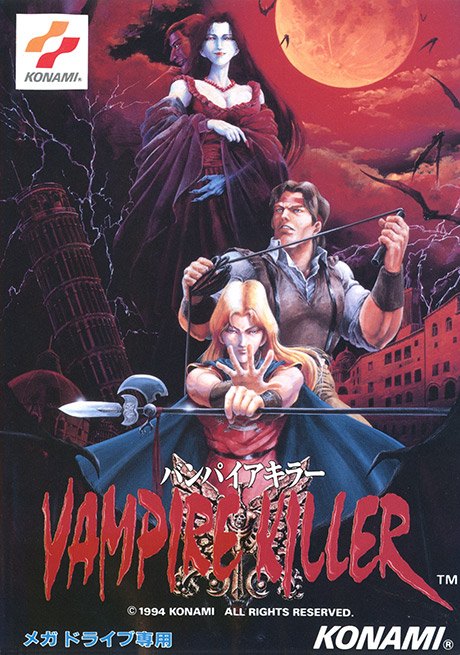
Japan · 1994
Vampire Killer. A completely different painting: Elizabeth Bartley presiding over John with his whip and Eric with his spear, the tower of Pisa leaning at the edge, under a red moon.
America · 1994
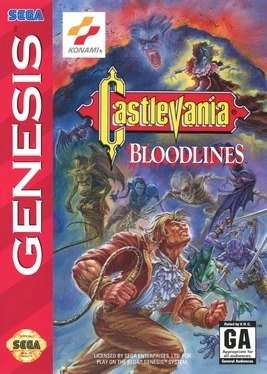
Tom duBois painted the American box: John Morris with the whip in front of a crowded monster composition, inside the red Genesis spine frame.
CASTLEVANIA: CIRCLE OF THE MOON
Konami · Game Boy Advance · 2001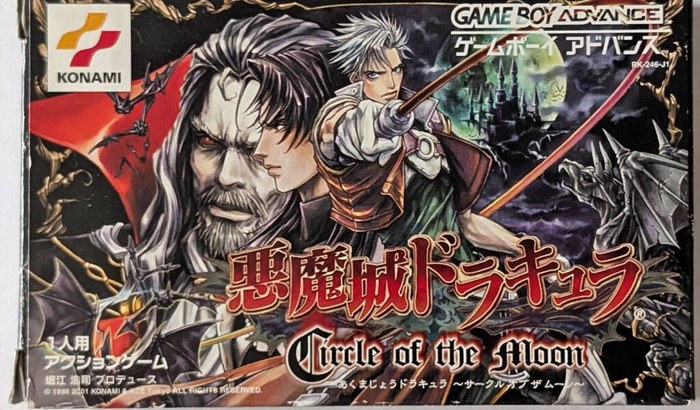
Japan · 2001
Akumajo Dracula: Circle of the Moon, in the wide landscape box Japanese Game Boy Advance games shipped in: Dracula's face beside Nathan, whip raised, the castle in green moonlight. Shown from a photograph of the box, cropped to the box itself.
America · 2001
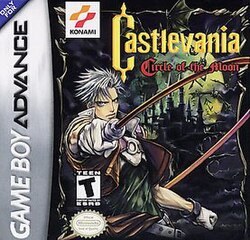
Nathan alone in the square American box behind the silver Game Boy Advance spine. The same hunt, a tighter crop of it.
CASTLEVANIA: DAWN OF SORROW
Konami · Nintendo DS · 2005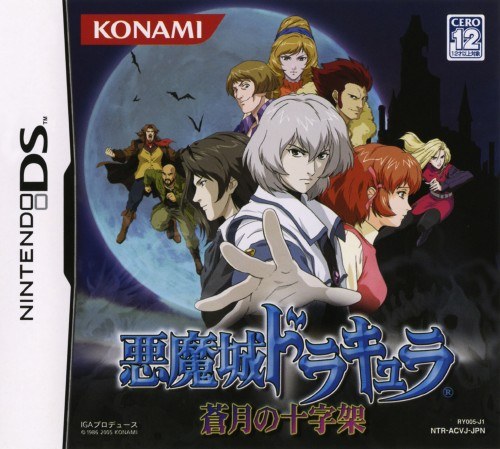
Japan · 2005
Akumajo Dracula: Sougetsu no Juujika. The anime ensemble under a full moon, Soma reaching toward the viewer, the Japanese title lettering across the bottom.
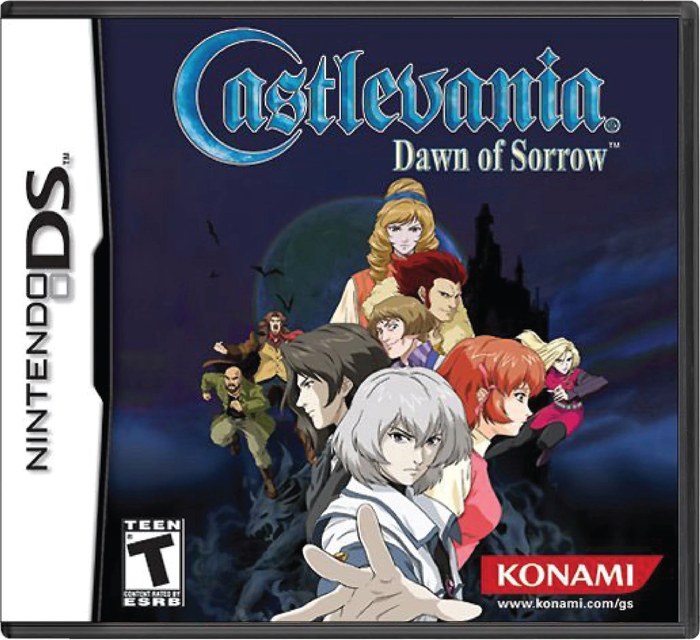
America · 2005
The same ensemble painting, recomposed under the blue Castlevania logo and the Nintendo DS spine. One painting served both boxes.
CASTLEVANIA: PORTRAIT OF RUIN
Konami · Nintendo DS · 2006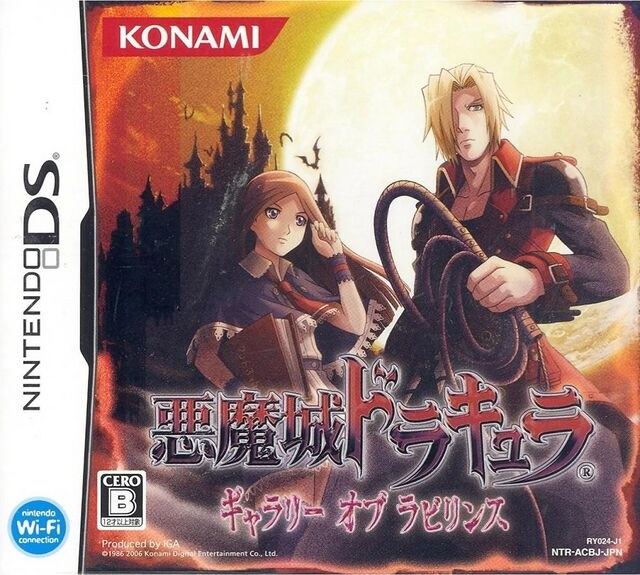
Japan · 2006
Akumajo Dracula: Gallery of Labyrinth. Jonathan with the coiled whip and Charlotte with her book before the castle and a huge pale moon, the Japanese lettering laid over the figures.
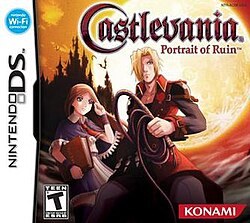
America · 2006
The same moonlit painting in the American frame, the two heroes swapped in scale under the Castlevania logo. Same art, different arrangement.
CASTLEVANIA: ORDER OF ECCLESIA
Konami · Nintendo DS · 2008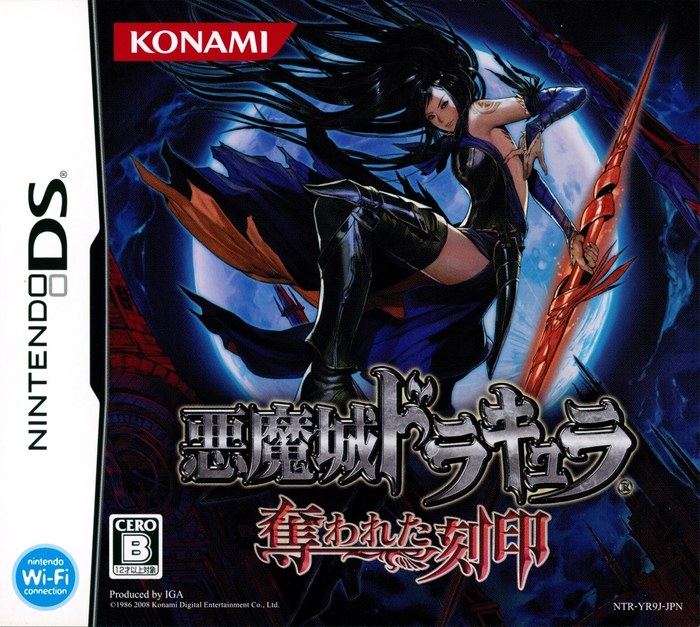
Japan · 2008
Akumajo Dracula: Ubawareta Kokuin. Shanoa alone, hair streaming, a red glyph blade in her hand: a solo portrait for the series' first canonical heroine.
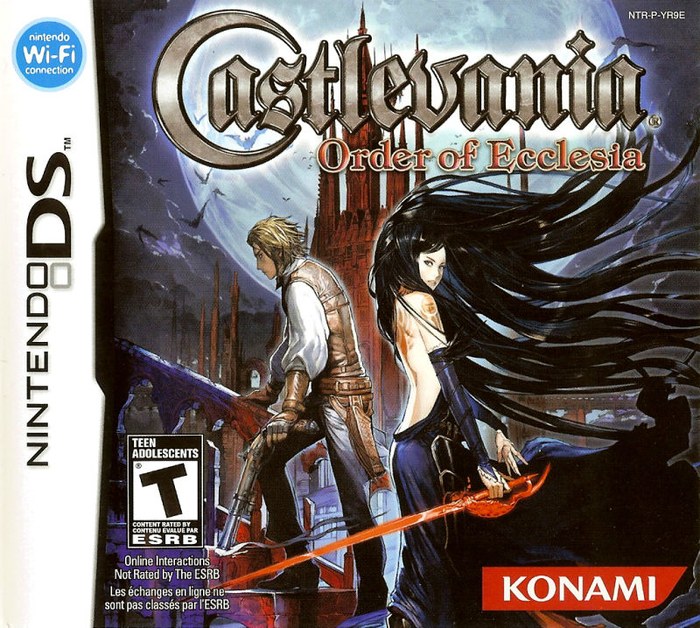
America · 2008
A different painting entirely: Shanoa from behind, glyphs on her back, Albus beside her under the moon and the castle spires.