
THE LIBRARY
Collector guides, cover censuses, and edition answers, documented issue by issue. Every page answers one specific question, completely.
DRAGON BALL
18 shelves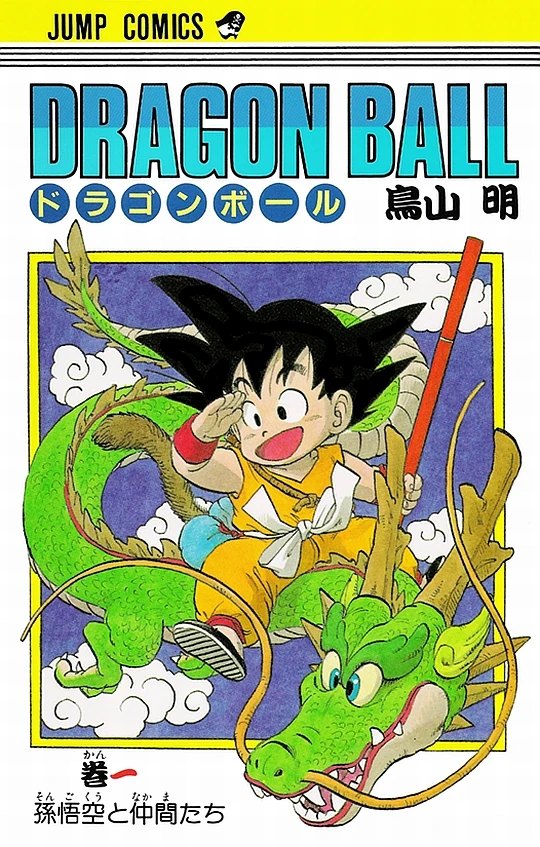
What inspired Dragon Ball?
Drunken Master, an editor's kung fu plan, and Journey to the West, in Toriyama's stated record.
Why is the anime split into Dragon Ball and Z, but the manga isn't?
Z was a 1989 TV rebranding. Toriyama picked the last letter because he wanted to stop.
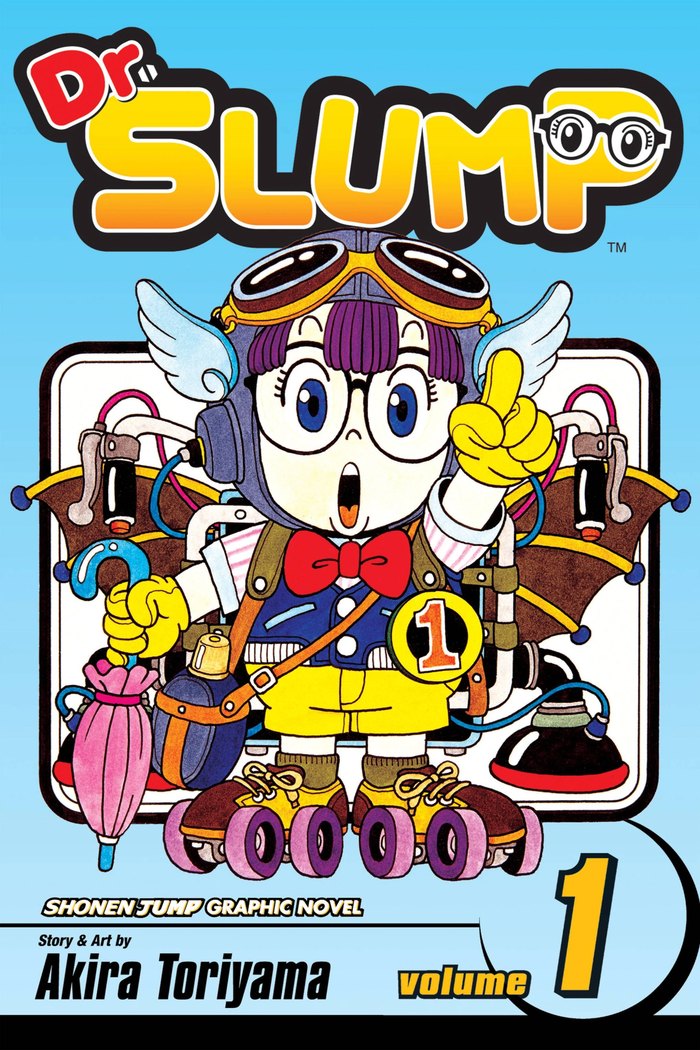
How are Dragon Ball and Dr. Slump connected?
One world: Goku chased General Blue into Penguin Village in chapter 81, and Arale finished the fight.
How did Dragon Ball run in Weekly Shonen Jump?
519 chapters, a debut three months after Dr. Slump, and a circulation peak of 6.53 million in the final year.
How did Dragon Ball's editors change the story during the Android and Cell sagas?
A geezer, a China doll, and a bug monster: the phone calls that rebuilt the villains, in Toriyama's own retelling.
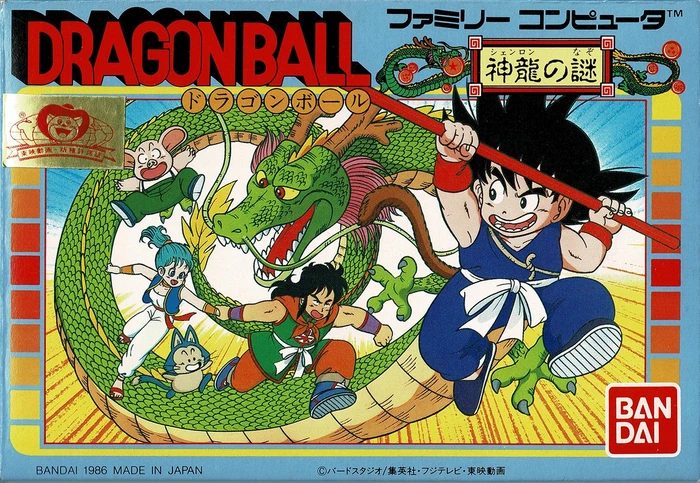
What was the first Dragon Ball video game?
A 1986 Epoch shooter almost nobody has seen, and the Famicom game America received with its own name scrubbed off.
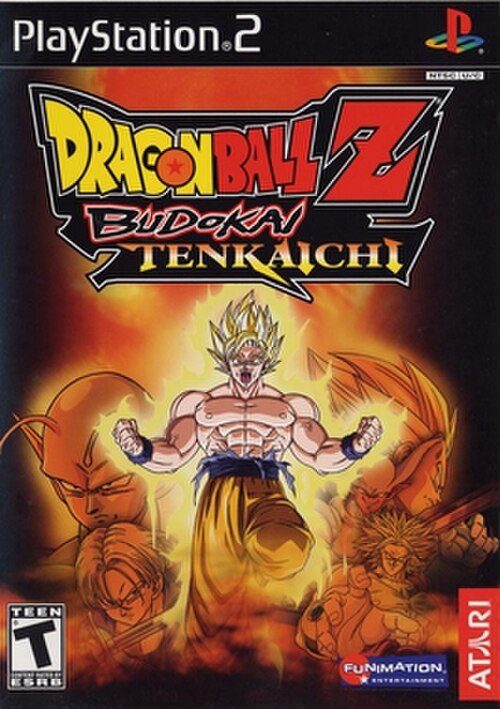
Why are the Dragon Ball Z Sparking games called Budokai Tenkaichi in America?
Japan named it for a shout in the theme song. America renamed it for a tournament, and the split lasted nineteen years.
The Dragon Ball Gallery
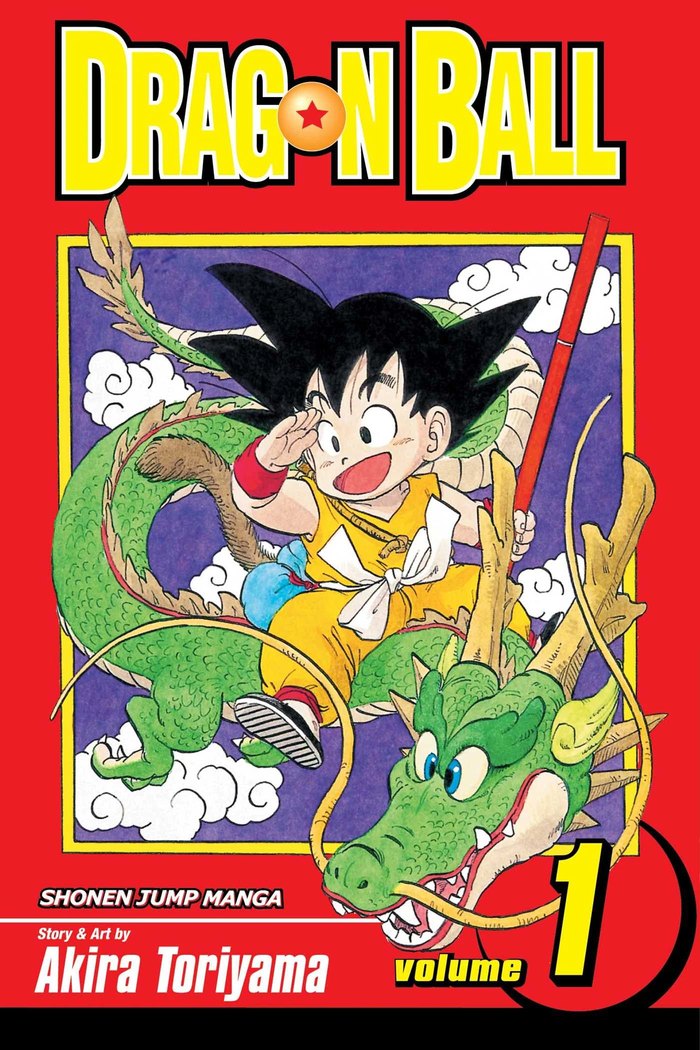
Volume 1 in Japanese and English side by side, the four Japanese editions of the manga, and the doors to the craft, anime, and games questions.
How is the Dragon Ball manga collected?
42 tankobon, 34 kanzenban with new Toriyama covers and a rewritten ending, 32 Full Color volumes, and 18 magazine sized volumes: one manga, four Japanese shapes.
How did Toriyama draw Dragon Ball each week?
No plan, a storyboard that doubled as the draft, one assistant, a G pen good for forty pages, and a manuscript driven to Nagoya Airport after all night sessions.
Why did Toriyama's art get sharper during Dragon Ball?
Animator Toyoo Ashida's taut line taught his pen speed, Goku had to grow up, and Super Saiyan hair stayed uninked to save the blacking in.
How much of Dragon Ball Z is not in the manga?
About 38 pure filler episodes in 291: the Garlic Jr. arc, a fake Namek, a driving test, an afterlife tournament, and the stretched fights in between.
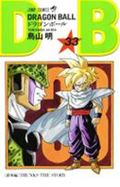
Why do Goku and Piccolo learn to drive?
Chi-Chi ordered it, in episode 125 from February 5, 1992, the anime original driving test that became the most beloved filler in the series.
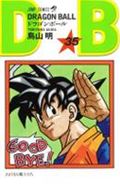
What did Toriyama actually do on Dragon Ball GT?
He named it, drew its cast, its robot, and its spaceship, and called the 64 episode Toei sequel a grand side story of the original Dragon Ball.
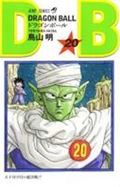
What changed in Dragon Ball Z Kai?
291 episodes became 159, the voices were recorded again, and the new Yamamoto score was withdrawn in 2011 and replaced with Kikuchi's original music.
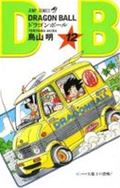
Who composed Dragon Ball's music?
Shunsuke Kikuchi, of Kamen Rider and Doraemon: 23 packages and hundreds of pieces for Dragon Ball and Z, still touring concert halls.
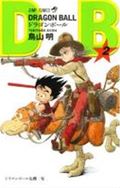
Why does a woman voice Goku?
Toriyama chose Masako Nozawa from the auditions in 1986. She also voices Gohan, Goten, and Bardock, and holds two Guinness world records for the role.
The History of Dragon Ball Z: Budokai
Dimps' 2002 PlayStation 2 fighter: the anime rebuilt in 3D, 3.5 million copies shipped, a rebuild ordered by Torishima, and a score replaced in the HD remaster.
EARTHBOUND
14 shelves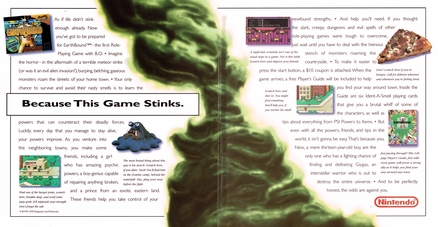
Why did EarthBound fail in America but become a classic?
518,000 sold in Japan against roughly 140,000 in America, despite a two million dollar campaign built on a joke about smell.
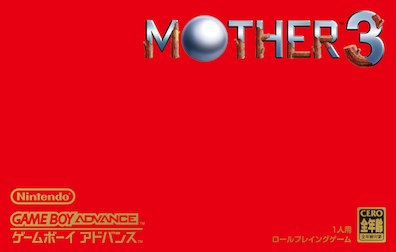
Why was Mother 3 never released outside Japan?
It arrived in April 2006 as the Game Boy Advance died, and Nintendo's on-record answer was that it just did not make business sense.
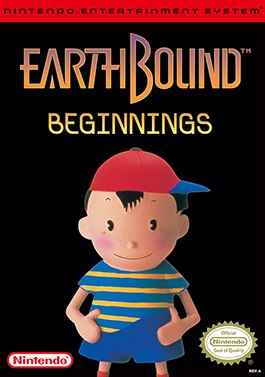
Why did EarthBound take so long to come back?
No single blocker kept it away. Iwata credited the fans on Miiverse for the 2013 return, and Beginnings followed in 2015.
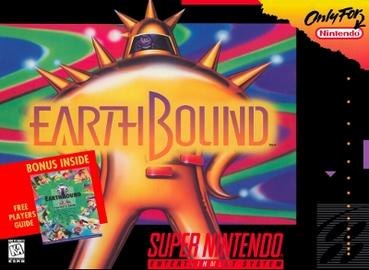
Why is the American EarthBound box so big?
The Player's Guide was packed inside in place of a manual. Mother 2's red box is the other half of the pair.
The History of Mother
Shigesato Itoi's 1989 RPG of modern America: baseball bats, psychic children, a shelved American version, and the 2015 return as EarthBound Beginnings.
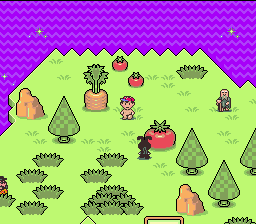
What is the Mother soundtrack album?
The 1989 album that turned a Famicom score into English pop songs, sung in London by a fourteen year old and the choir of St Paul's Cathedral.
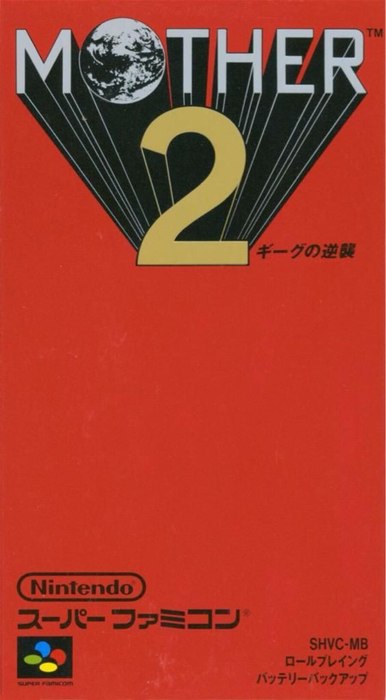
The Mother Gallery
Three games, two countries, one red wordmark: the Japanese and American boxes for Mother, EarthBound, and Mother 3 side by side, with the histories and questions behind them.
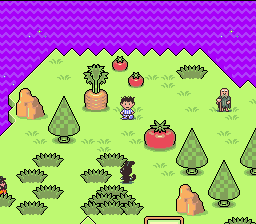
The History of EarthBound
Ape and HAL's 1994 sequel: Ness and the eight Sanctuaries, the five year making, the American flop, and the classic it became.
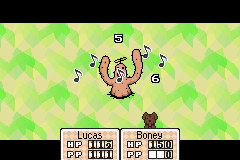
The History of Mother 3
Lucas and the Nowhere Islands: twelve years, four consoles, a cancelled 3D version, and the 2006 Game Boy Advance game Japan kept.
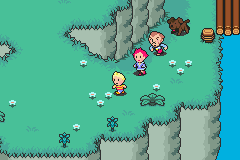
What is the Mother 3 fan translation?
Starmen.net's two year volunteer localization of Mother 3, led by professional translator Clyde Mandelin: 1,000 pages of script, 100,000 downloads in a week.
Will there be a Mother 4?
Shigesato Itoi has answered for a decade, in his own words: making a fourth Mother is, as he put it, totally impossible.
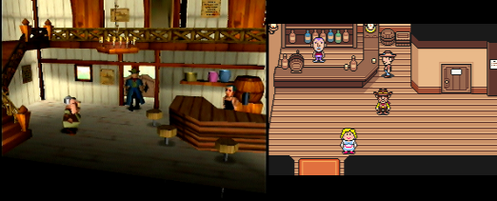
Why was EarthBound 64 cancelled?
The 3D Mother 3 died in August 2000. Miyamoto blamed the GameCube's claim on the team, Iwata blamed himself, and Itoi published the whole conversation.
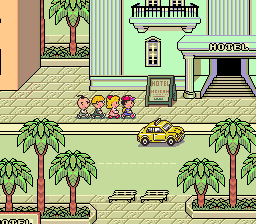
What changed in EarthBound's American localization?
Red crosses off hospitals, bars turned into cafes, a band redrawn to avoid a lawsuit: Mother 2 became EarthBound under Nintendo of America's 1990s content rules.
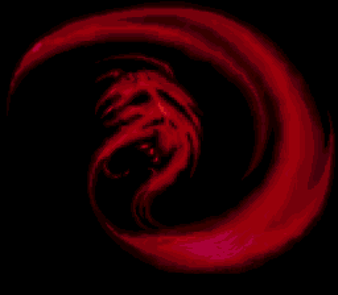
What inspired Giygas?
Itoi traced the final battle's dialogue to a film scene he walked into as a child and misunderstood. The fetus theory, he never said: the record, separated.
ESCAFLOWNE
15 shelvesThe History of Escaflowne
From a foggy trip to Nepal to a worldwide hit: the history of The Vision of Escaflowne, Sunrise's 1996 fantasy mecha series, its manga, film, game, and editions.
Where did the idea for Escaflowne come from?
Shoji Kawamori conceived Escaflowne after a trip to Nepal's foggy mountains: mecha plus divination, researched through Atlantis and the Bermuda Triangle.
What was Escaflowne almost going to be?
The first Escaflowne was a 39-episode, male-oriented action series under director Yasuhiro Imagawa. It was shelved, then rebuilt by Kazuki Akane into the 1996…
How was The Vision of Escaflowne made?
Sunrise built Escaflowne as a deliberate fusion of shōnen mecha action and shōjo romance, animated in 1996, with extended scenes restored for Japanese home video.
Who designed Escaflowne's characters?
Nobuteru Yuki, the character designer of the Record of Lodoss War OVA, designed Escaflowne's cast. Hitomi was the first character he ever designed completely…
Who designed Escaflowne's Guymelefs?
Kimitoshi Yamane and Junya Ishigaki designed Escaflowne's Guymelefs, working from Shoji Kawamori's transforming-dragon concept inherited from Air Cavalry Chronicles.
Who composed the music for Escaflowne?
Yoko Kanno and Hajime Mizoguchi composed Escaflowne's score: four Victor soundtrack CDs mixing orchestra, chant, and pop, and the launch of Maaya Sakamoto's career.
The Escaflowne Manga Gallery
Every Escaflowne manga volume documented: Katsu Aki's eight shōnen tankōbon (1995–1998) and Yuzuru Yashiro's two shōjo volumes, with dates and ISBNs from the…
Why are there three Escaflowne manga?
Escaflowne has three manga because the anime kept changing: Katsu Aki's shōnen version preserves the shelved original, Yuzuru Yashiro's shōjo version follows the…
What are the Escaflowne light novels?
Yumiko Tsukamoto's six Escaflowne light novels, serialized in Newtype magazine in 1996–97 and illustrated by Nobuteru Yuki and Hirotoshi Sano, documented volume…
Why is the Escaflowne movie so different?
The 2000 Escaflowne film, animated by Bones, retells the series as a dark fantasy: a despairing Hitomi, a violent Van, an Asia-inspired Gaea, and redesigned…
What Escaflowne video games are there?
One: Bandai's 1997 PlayStation action-adventure, Japan-only, developed by BEC, in standard (SLPS-01015) and limited (SLPS-01014) editions, the limited box…
What happened to Escaflowne on Fox Kids?
Fox Kids' 2000 Escaflowne was a Saban-produced edit: first episode skipped, Hitomi downplayed, Kanno's score partly replaced, 26 episodes compressed to 23,…
Why does Escaflowne have two English dubs?
The original Ocean dub was recorded against the broadcast edit and cannot fit the HD director's cut. Funimation's 2016 Kickstarter, $318,784 from 2,058 backers,…
The Escaflowne editions, documented
The Escaflowne home video editions that matter: Bandai's 1998 subtitled tapes, the 2002 Limited Edition, Perfect Collection, Anime Legends, Funimation's 2016…